SNF's social commitments focus on safe and fair employment, employee development, equal opportunity, responsible labor practices, and constructive relationships with local communities. This chapter describes the workforce, health and safety performance, value-chain expectations, and locally led initiatives.
2 pagesChapter Introduction
People & Society describes how SNF seeks to create positive social impact through employment practices, safety, development, human rights, and community engagement. The chapter connects Group policies with workforce indicators and local initiatives.
Accessible text version of this section
Report page 61
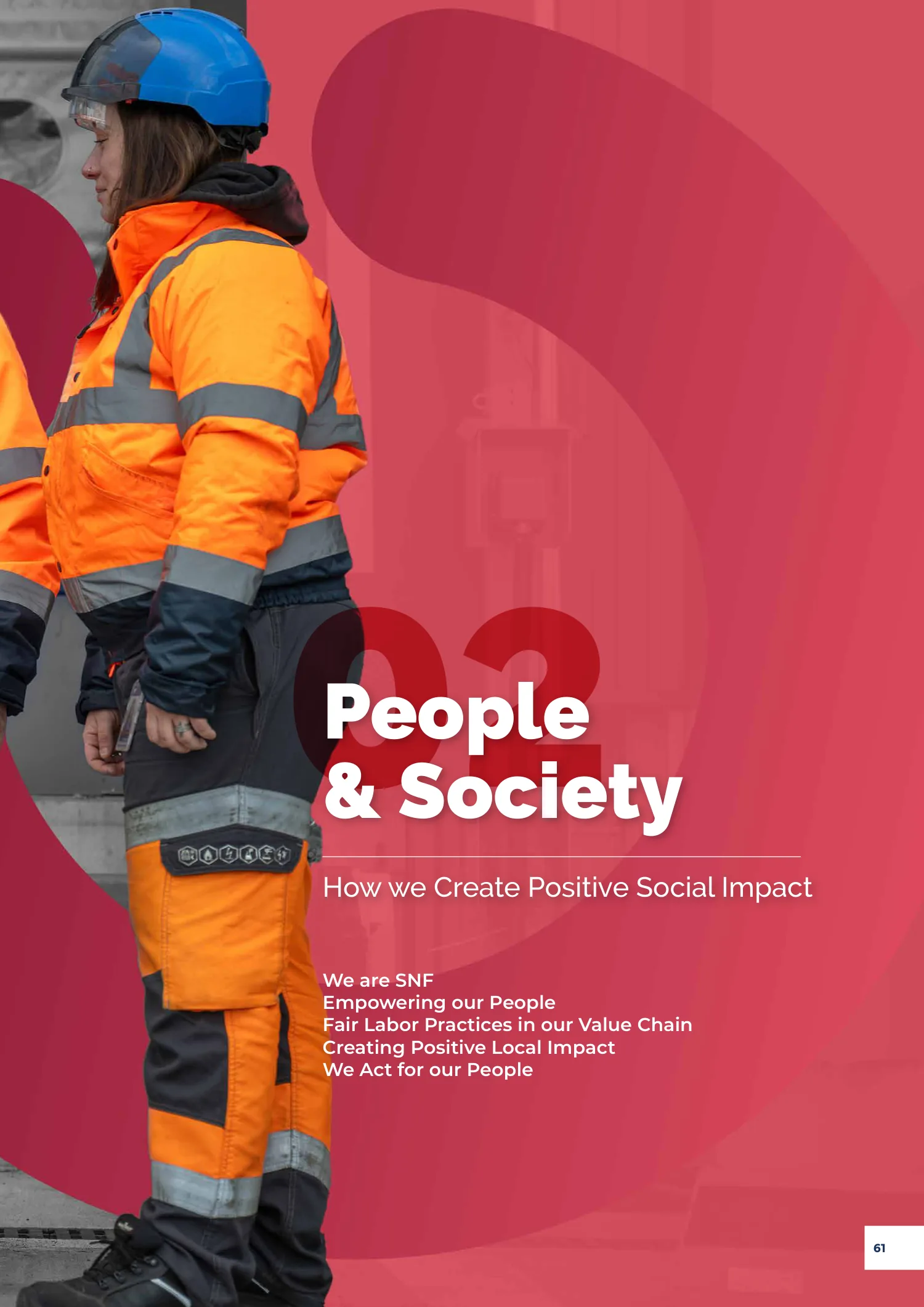
02 People & Society
How we Create Positive Social Impact
We are SNF Empowering our People Fair Labor Practices in our Value Chain Creating Positive Local Impact We Act for our People
2 pages2.1 We Are SNF
SNF's global workforce supports production, research, commercial activities, technical service, and corporate functions. The section presents employee demographics, geographic distribution, employment trends, and the importance of safe, respectful, fair, and inclusive working conditions.
Accessible text version of this section
Report page 62
2.1 We are SNF
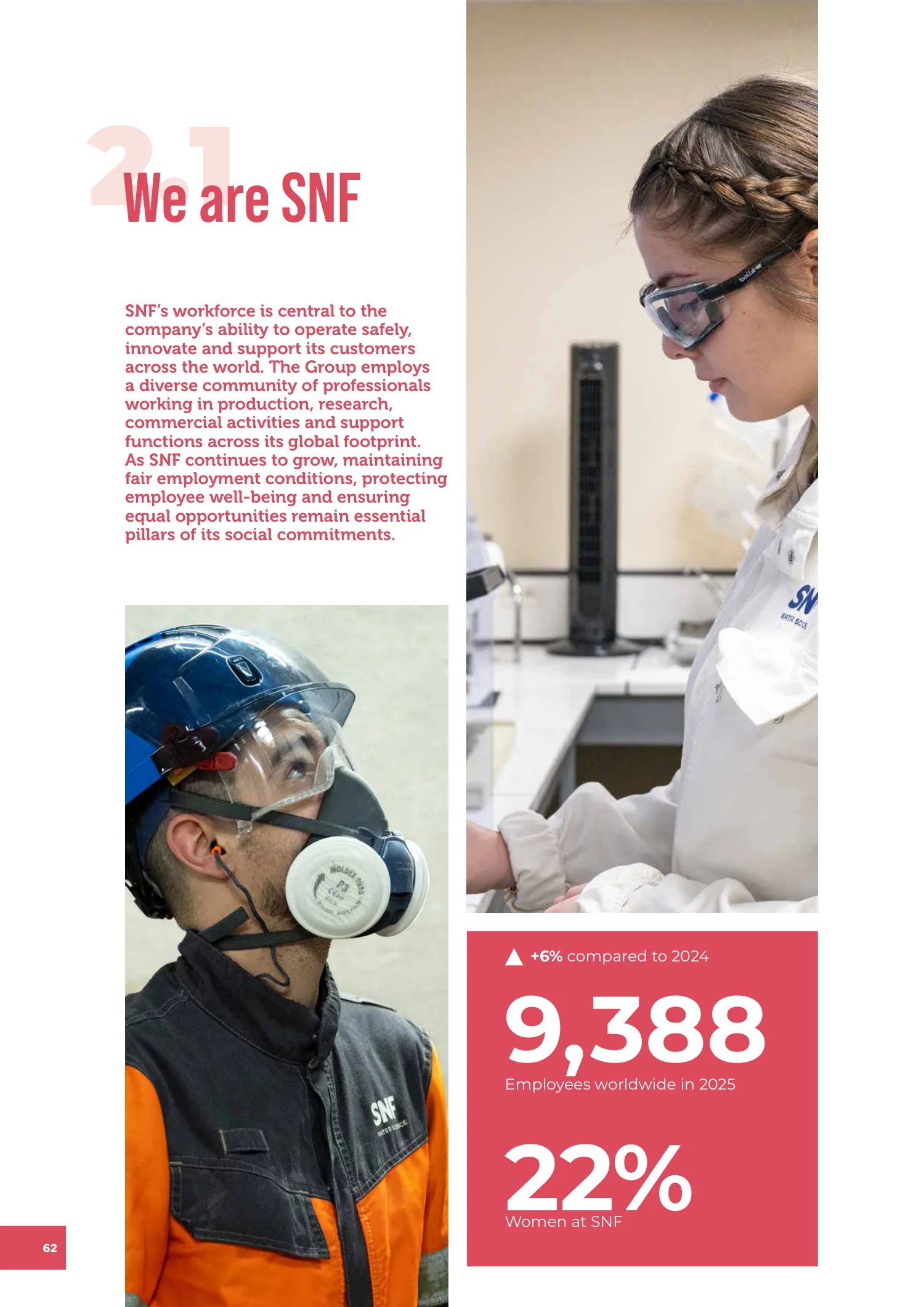
SNF’s workforce is central to the company’s ability to operate safely, innovate and support its customers across the world. The Group employs a diverse community of professionals working in production, research, commercial activities and support functions across its global footprint. As SNF continues to grow, maintaining fair employment conditions, protecting employee well-being and ensuring equal opportunities remain essential pillars of its social commitments.
+6% compared to 2024
9,388 Employees worldwide in 2025
22% Women at SNF
Report page 63
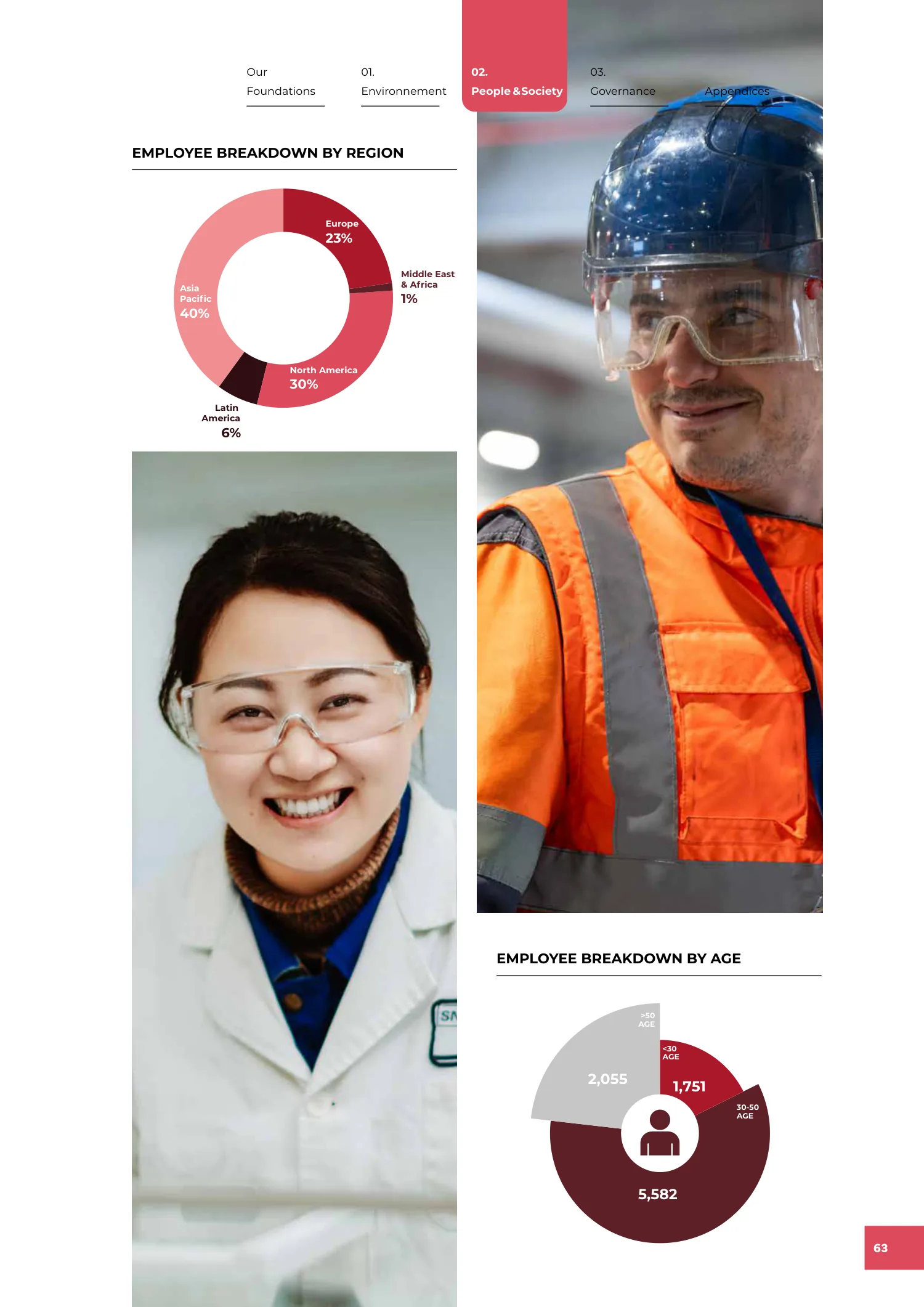
EMPLOYEE BREAKDOWN BY REGION
Asia Pacific 40%
Latin America 6%
Europe 23%
North America 30%
Middle East & Africa 1%
EMPLOYEE BREAKDOWN BY AGE
50 AGE 2,055
30-50 AGE 5,582
<30 AGE 1,751
2 pages2.2 Empowering Our People
SNF invests in employee skills, engagement, equal opportunity, and career development while monitoring health and safety performance. Training, workforce dialogue, diversity initiatives, and preventive safety systems support long-term employee well-being and operational reliability.
Accessible text version of this section
Report page 64
2.2 Empowering our people
Developing skills and engagement
Employment
SNF monitors key employment indicators across all regions, including total headcount, contract types, turnover and internal mobility. The Group relies on a mix of permanent and temporary contracts, reflecting both long-term industrial stability and the operational flexibility required in specialty chemical manufacturing. Turnover is monitored to identify trends, anticipate workforce needs and ensure adequate succession planning. SNF aims to provide stable, long-term employment opportunities wherever possible, with a focus on supporting skills retention, expertise development and organizational continuity.
Health & safety
Safety remains SNF’s highest priority. The Group’s “Safety First” culture shapes behavior and decision-making at every level of the organization. Safety performance is monitored through indicators such as Total Recordable Incident Rate (TRIR), Lost Time Incident Rate (LTIR) and Process Safety Events (Tier-1/Tier-2), reflecting both occupational and process risks. All SNF sites follow structured prevention programs, regular safety audits, incident-reporting procedures and extensive training to ensure that employees and contractors understand operational risks. Continuous improvement and active engagement of employees are central to maintaining high safety standards. SNF seeks to ensure that every employee returns home safely at the end of each day.
Beyond performance indicators, SNF deploys structured prevention programs at all production sites, including regular safety audits, task-based risk analysis, emergency drills, and continuous safety training. Health and safety governance is reviewed periodically by senior management, ensuring alignment between operational practices and Group objectives.
Training, diversity, equality
Employee development is a strategic priority for SNF. The company provides ongoing technical and professional training, supporting the growth of operational capabilities and leadership potential. To ensure a solid understanding of the Group’s sustainability commitments, ESG awareness sessions are deployed across regions so employees are familiar with SNF’s strategy, expectations and available tools. Diversity and equality are also essential components of people development. The Group values the contribution of employees with different backgrounds, cultures and profiles, and works to create an inclusive work environment where career advancement and opportunities for development are based on competence and merit.
In addition to technical training, SNF supports structured talent development through internal mobility, performance reviews, and succession planning for key roles. This approach ensures long-term retention of competencies and leadership continuity across regions.
Non Discrimination
SNF upholds a strict policy of non-discrimination across all its operations. The Group prohibits any form of discrimination based on gender, age, origin, disability, beliefs or any other personal characteristic. Awareness and prevention programs support respectful workplace behaviors and ensure that employees understand their rights and responsibilities.
Managers receive guidance to handle sensitive situations and promote equal treatment within their teams. In addition, SNF provides a dedicated reporting channel for cases of discrimination, as well as access to an Ethics Officer, ensuring that concerns can be raised confidentially and addressed appropriately. This commitment
Report page 65
forms part of SNF’s broader ambition to foster a fair and respectful working environment. Non-discrimination is embedded into recruitment, promotion, and compensation practices. HR processes are periodically reviewed to ensure equal treatment, and managers receive guidance on handling sensitive situations. Allegations are monitored and addressed through formal internal procedures.
Pay equity & living wage
As part of its commitment to fairness and social responsibility, SNF has deployed a living-wage methodology across its subsidiaries to ensure that employee compensation meets or exceeds locally recognized thresholds for decent living conditions. The Group regularly reviews compensation structures to strengthen internal equity and ensure that wage practices are aligned with market standards. This focus on fair pay supports employee well-being and contributes to SNF’s ability to attract and retain talent across all regions.
Labor rights & working time
SNF respects fundamental labor rights and ensures that employees are provided with appropriate working conditions, clear employment terms and access to social protection. Working-time arrangements comply with local regulations and are managed to promote well-being and operational efficiency. Dialogues between employees and management, both formal and informal, help ensure that concerns are heard and addressed. SNF promotes a work environment that values responsibility, mutual respect and transparency, reinforcing trust and strengthening the Group’s long-term social foundations.
ESRS S1
HEALTH & SAFETY
1.13 WRIR Work-related injury rate 2025
TARGET WRIR : 2
GENDER EQUITY 66% of SNF's women hold managerial positions
2 pages2.3 Fair Labor Practices in Our Value Chain
SNF applies labor, safety, and human-rights expectations to contractors and suppliers through assessments, contractual requirements, engagement, and remediation planning. The section also discusses responsible sourcing, supplier collaboration, and value-chain efforts related to Scope 3 emissions.
Accessible text version of this section
Report page 66
2.3 Fair Labor Practices
In our value chain
Working conditions & safety for contractors/suppliers
SNF recognizes that part of its responsibility extends to the many workers employed by contractors and suppliers throughout its global value chain. Although these individuals are not part of SNF’s direct workforce, the company expects all partners to uphold safe working conditions, respect human rights and manage labor-related risks with the same rigor applied within SNF’s own operations.
Suppliers operating in activities that involve chemical handling, logistics or industrial processes are expected to maintain appropriate safety systems, provide adequate protective equipment and ensure that workers are trained to perform their tasks safely. SNF also encourages suppliers to share incident information and lessons learned to support continuous improvement. The Group seeks to ensure that upstream and contracted workers operate in conditions that preserve their health, safety and dignity.
Audits, assessments, remediation
To manage risks related to labor conditions in the supply chain, SNF relies on a structured set of due-diligence tools. Supplier assessments may include sustainability questionnaires, document reviews, analysis of ESG ratings and the use of independent evaluation platforms such as EcoVadis. These assessments help SNF identify suppliers whose practices align with the Group’s expectations, as well as those requiring additional support or corrective actions.
When potential gaps are detected, SNF engages directly with the supplier to clarify expectations and understand root causes. Depending on the severity of the findings, SNF may request specific improvements, implement follow-up monitoring
or establish remediation plans. The objective of this process is not only to ensure compliance with SNF’s Responsible Purchasing Charter but also to help suppliers strengthen their management of environmental, human-rights and labor-related risks. This approach reinforces responsible business conduct across the value chain.
SNF applies a risk-based due diligence approach, prioritizing suppliers located in higher-risk regions or operating in sensitive sectors. Follow-up reviews and corrective-action monitoring ensure that identified gaps are addressed within defined timelines.
Training & coverage
SNF encourages suppliers and contractors to provide workers with appropriate training on safety, environmental protection and responsible chemical management. These topics are particularly important for partners involved in the handling, storage or transport of chemical products. SNF communicates its own expectations and best practices to suppliers and supports training needs when relevant, helping ensure consistent levels of awareness and competency throughout the value chain.
This training dimension also reinforces SNF’s broader commitment to responsible chemistry, as operators in the value chain play a key role in ensuring that products are managed safely and sustainably from procurement to application.
Report page 67
Engaging with Value Chain Partners to Reduce Scope 3 Emissions
A significant share of SNF’s total greenhouse-gas emissions arises from upstream activities, particularly from the purchasing of raw materials, packaging and external services. Strengthening collaboration with suppliers is therefore a critical element of SNF’s climate strategy. The company evaluates suppliers’ decarbonization programs, transparency practices and GHG-management approaches through tools such as EcoVadis and by reviewing suppliers’ sustainability reports when available.
In 2024, SNF initiated a dedicated Responsible Purchasing campaign to improve the accuracy and consistency of emissions data associated with raw materials. This initiative enhances SNF’s ability to understand and manage Scope 3 emissions and also supports suppliers in advancing their own climate strategies. Through direct engagement and regular dialogue, SNF works with value-chain partners to identify reduction opportunities, promote the adoption of lower-carbon feedstocks and strengthen responsible production pathways.
This collaborative approach not only supports SNF’s own transition objectives but also contributes to broader environmental benefits within the chemical industry, helping suppliers, customers and communities move toward more sustainable practices.
ESRS S2
Human Rights & Anti-Slavery Commitment
SNF prohibits forced labor, child labor, and any form of modern slavery across its operations and supply chain. Human rights risks are assessed through supplier screening, alignment with international frameworks such as the UN Global Compact, and contractual requirements embedded in the Responsible Purchasing Policy. Any concerns may be raised through the Group’s whistleblowing mechanism and are investigated through formal internal procedures.
2 pages2.4 Creating Positive Local Impact
SNF sites interact with neighboring communities through employment, industrial activity, environmental performance, and local partnerships. Community programs, stakeholder dialogue, mitigation measures, education, charitable support, and employee volunteering contribute to locally relevant positive impact.
Accessible text version of this section
Report page 68
2.4 Creating positive local impact
Acting responsibly in our territories
Potential impacts
SNF operates industrial sites that can interact with surrounding communities through their use of natural resources, logistical activities and environmental emissions. Although most of the Group’s facilities are located in established industrial zones, SNF remains attentive to the actual and potential impacts its operations may generate. These include local environmental effects, such as noise, traffic, odors or the handling of chemical substances, as well as broader social considerations relating to employment, economic activity and community well-being.
SNF evaluates these interactions as part of its environmental-and social-risk management processes. The Group monitors relevant indicators, ensures compliance with local regulations and maintains open communication channels with authorities to anticipate concerns and address them effectively. The company seeks to operate as a respectful and responsible neighbor by managing risks proactively, ensuring rapid response when issues arise and maintaining high standards of environmental protection.
Community engagement
Communities located near SNF production sites are considered key stakeholders in SNF’s sustainability and operational governance. Community engagement is structured through formal and informal dialogue mechanisms aimed at maintaining transparency, addressing concerns, and strengthening long-term trust. At site level, engagement is typically organized through:
• regular meetings with municipal authorities and local public institutions,
• participation in local industrial or environmental committees,
• structured communication during major operational changes (e.g., capacity expansion, new projects),
• proactive information-sharing regarding environmental performance, safety measures and emergency preparedness,
• response mechanisms for complaints or concerns raised by local residents. Each industrial site designates responsible representatives to maintain these local relationships and ensure that community feedback is considered in operational decision-making.
SNF’s presence contributes to local economic development by supporting employment, training opportunities and indirect economic activity through procurement and partnerships. In certain regions, the Group also collaborates with local institutions to promote educational, environmental or social initiatives that reflect community needs and the company’s expertise in water science and responsible industrial practices.
Report page 69
Mitigation & contribution programs
SNF implements measures designed to mitigate potential impacts on nearby communities and contribute positively to their well-being. These measures include strict control of emissions and discharges, maintenance of high environmental-performance standards, adoption of preventive safety practices and continuous improvement of industrial processes. When projects may affect local stakeholders, SNF assesses potential risks and integrates mitigation elements into planning and execution.
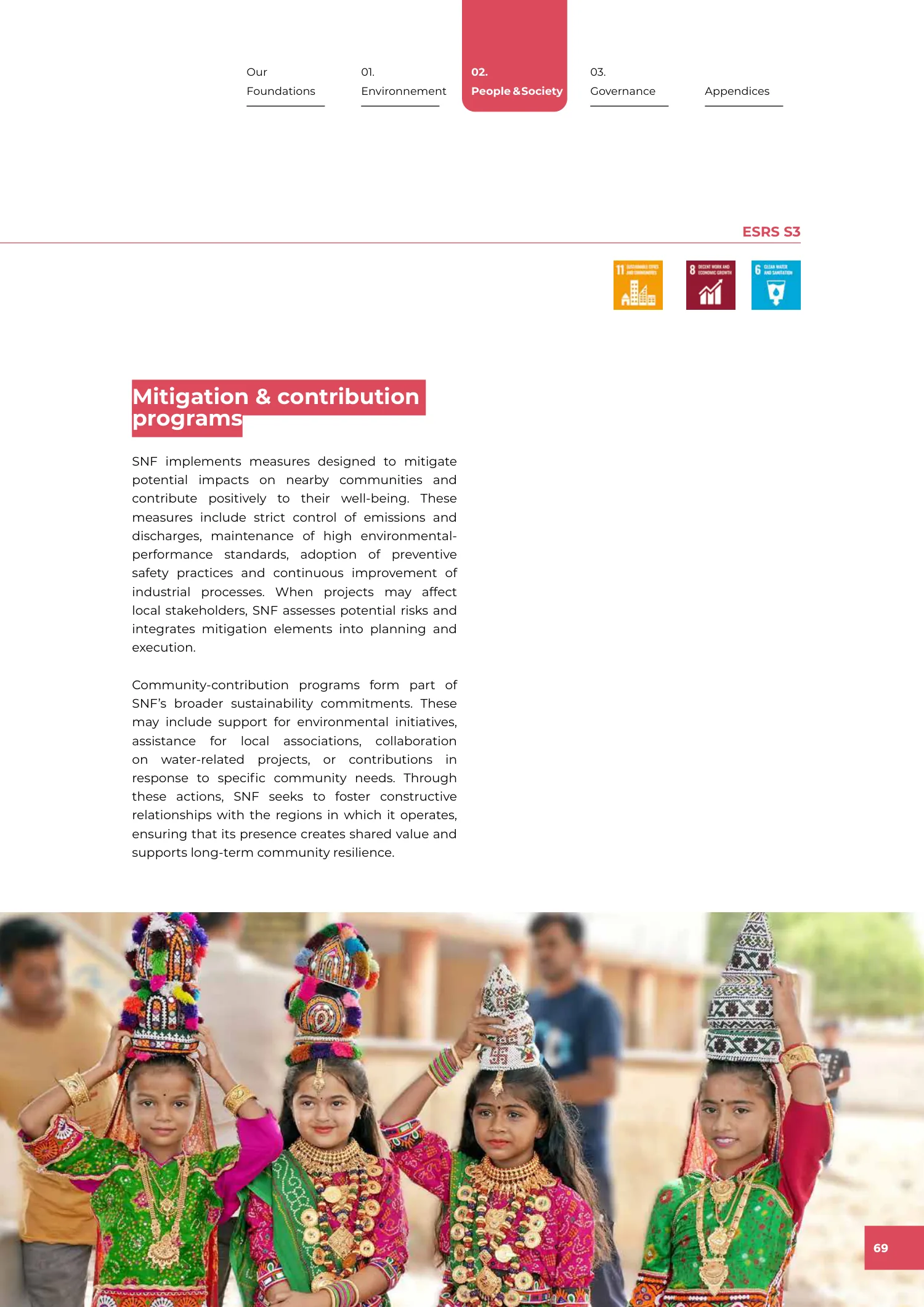
Community-contribution programs form part of SNF’s broader sustainability commitments. These may include support for environmental initiatives, assistance for local associations, collaboration on water-related projects, or contributions in response to specific community needs. Through these actions, SNF seeks to foster constructive relationships with the regions in which it operates, ensuring that its presence creates shared value and supports long-term community resilience.
ESRS S3
2 pagesWe Act for Our People
Local examples from 2025 highlight employee training, recognition, sports, inclusion, community support, education, and charitable initiatives. These actions demonstrate how subsidiaries adapt Group priorities to local workforce and community needs.
Accessible text version of this section
Report page 70
We Act for Our People
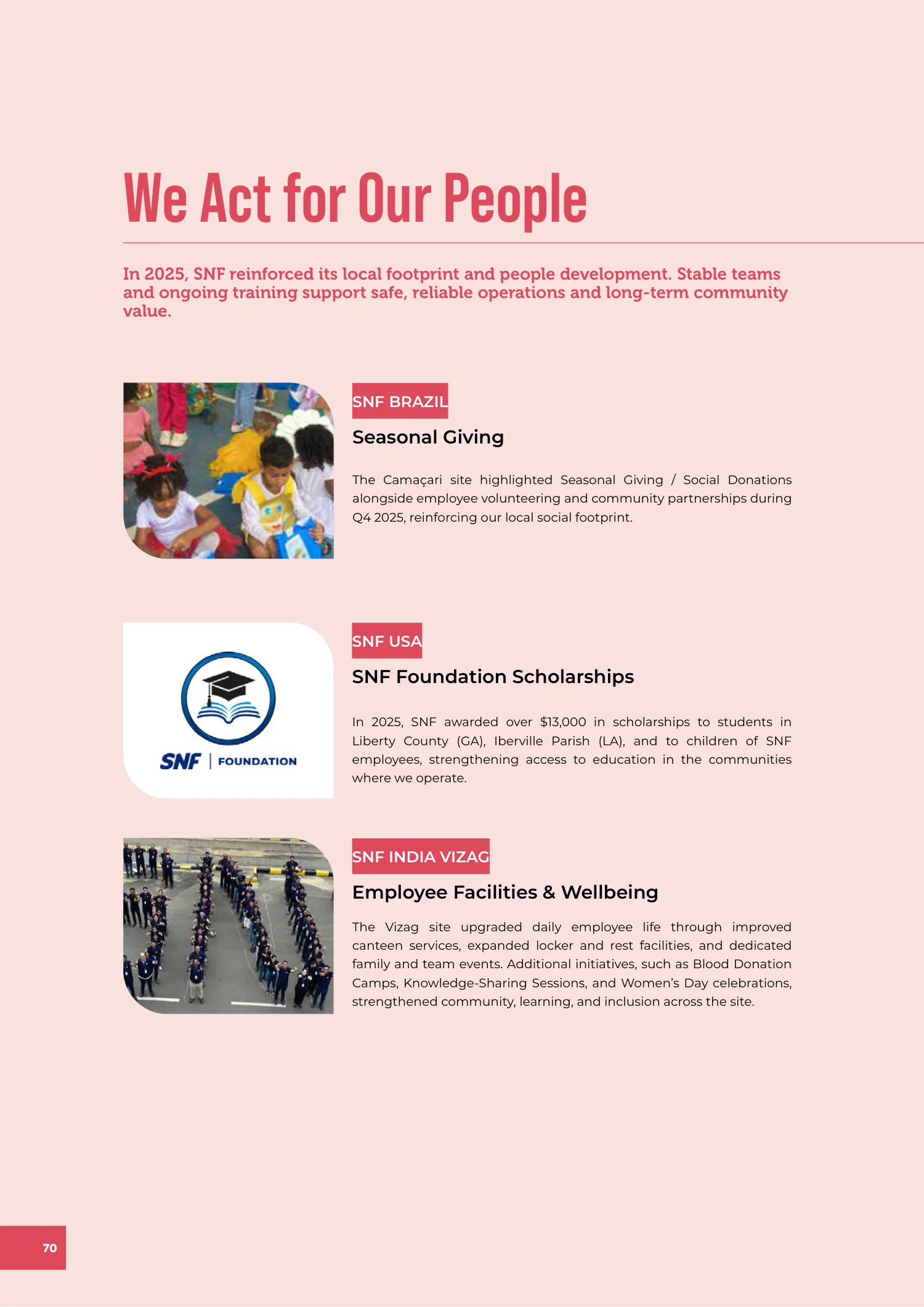
In 2025, SNF reinforced its local footprint and people development. Stable teams and ongoing training support safe, reliable operations and long-term community value.
SNF BRAZIL
Seasonal Giving
The Camaçari site highlighted Seasonal Giving / Social Donations alongside employee volunteering and community partnerships during Q4 2025, reinforcing our local social footprint.
SNF USA
SNF Foundation Scholarships
In 2025, SNF awarded over $13,000 in scholarships to students in Liberty County (GA), Iberville Parish (LA), and to children of SNF employees, strengthening access to education in the communities where we operate.
SNF INDIA VIZAG
Employee Facilities & Wellbeing
The Vizag site upgraded daily employee life through improved canteen services, expanded locker and rest facilities, and dedicated family and team events. Additional initiatives, such as Blood Donation Camps, Knowledge-Sharing Sessions, and Women’s Day celebrations, strengthened community, learning, and inclusion across the site.
Report page 71
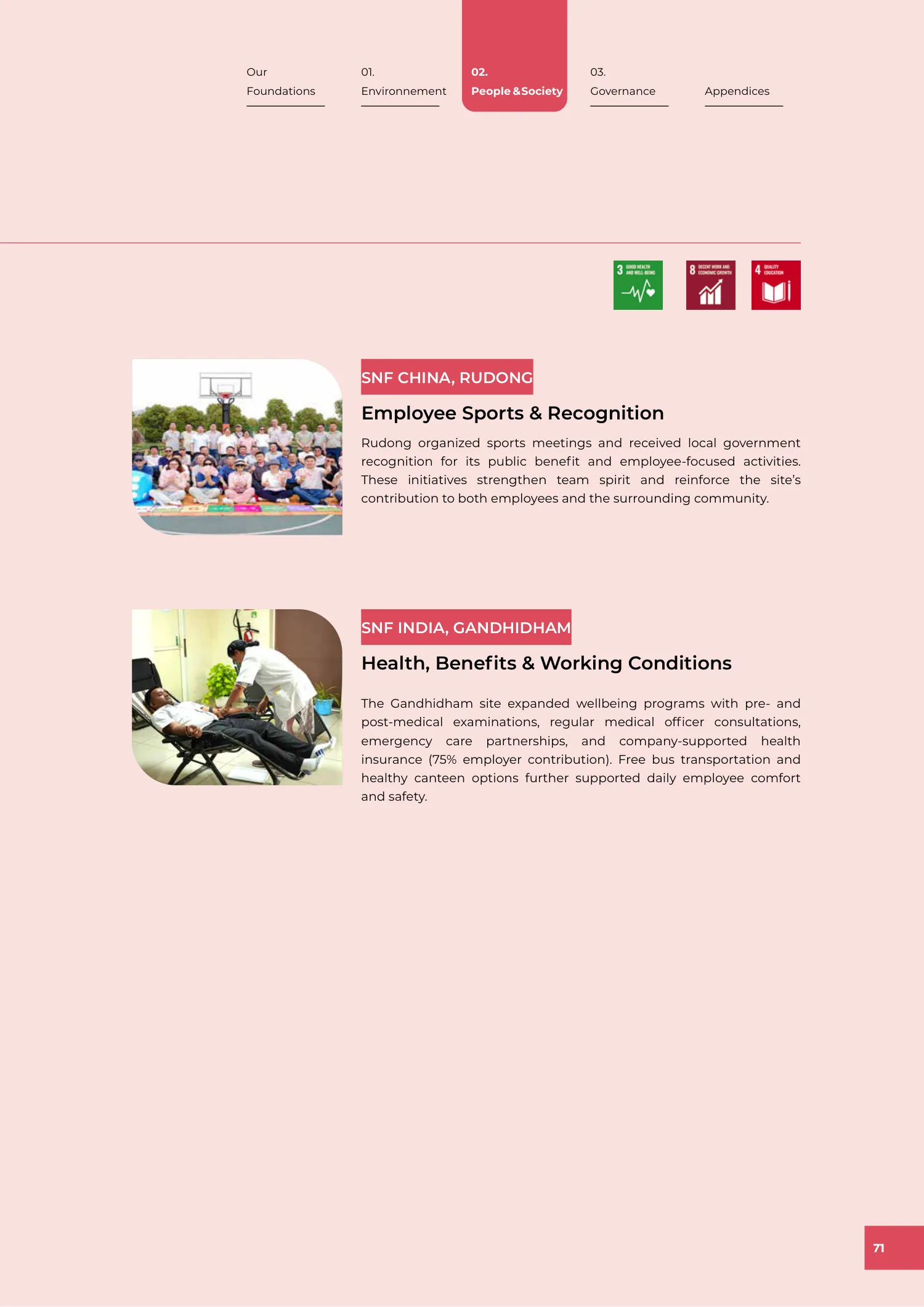
SNF CHINA, RUDONG
Employee Sports & Recognition
Rudong organized sports meetings and received local government recognition for its public benefit and employee-focused activities. These initiatives strengthen team spirit and reinforce the site’s contribution to both employees and the surrounding community.
SNF INDIA, GANDHIDHAM
Health, Benefits & Working Conditions
The Gandhidham site expanded wellbeing programs with pre- and post-medical examinations, regular medical officer consultations, emergency care partnerships, and company-supported health insurance (75% employer contribution). Free bus transportation and healthy canteen options further supported daily employee comfort and safety.