SNF's sustainability approach begins with its water-focused business model, private ownership structure, global operating footprint, and ACT FOR program. This chapter explains how governance, stakeholder engagement, double materiality, policies, actions, and targets guide responsible growth.
2 pagesChapter Introduction
Our Foundations describes who SNF is, how the Group creates value, and how sustainability is incorporated into business decisions. It introduces the business model, governance system, materiality assessment, and policies that support progress.

Accessible text version of this section
Report page 13
00 Our Foundations
Who We Are and How We Operate
Our Business Model Strong Governance for Responsible Business What Matters Most : Double Materiality Policies, Actions and Targets that drive our progress
12 pages0.1 Our Business Model and Strategy for Sustainable Growth
SNF develops and supplies more than 1,100 water-soluble polymers used across municipal and industrial water treatment and numerous industrial markets. The section explains the Group's global footprint, value-creation model, ACT FOR sustainability strategy, ratings, memberships, and engagement with employees, customers, suppliers, regulators, and communities.
Accessible text version of this section
Report page 14
0.1 Our Business Model
and Strategy for Sustainable Growth
SNF is a global specialty chemical company whose business model is centered on water chemistry. The Group develops, manufactures, and supplies a broad portfolio of more than 1,100 water-soluble polymers used to treat, preserve, and recycle water across municipal and industrial systems. These solutions directly improve water-treatment performance, reduce water withdrawals, and support circular-water practices across multiple sectors.
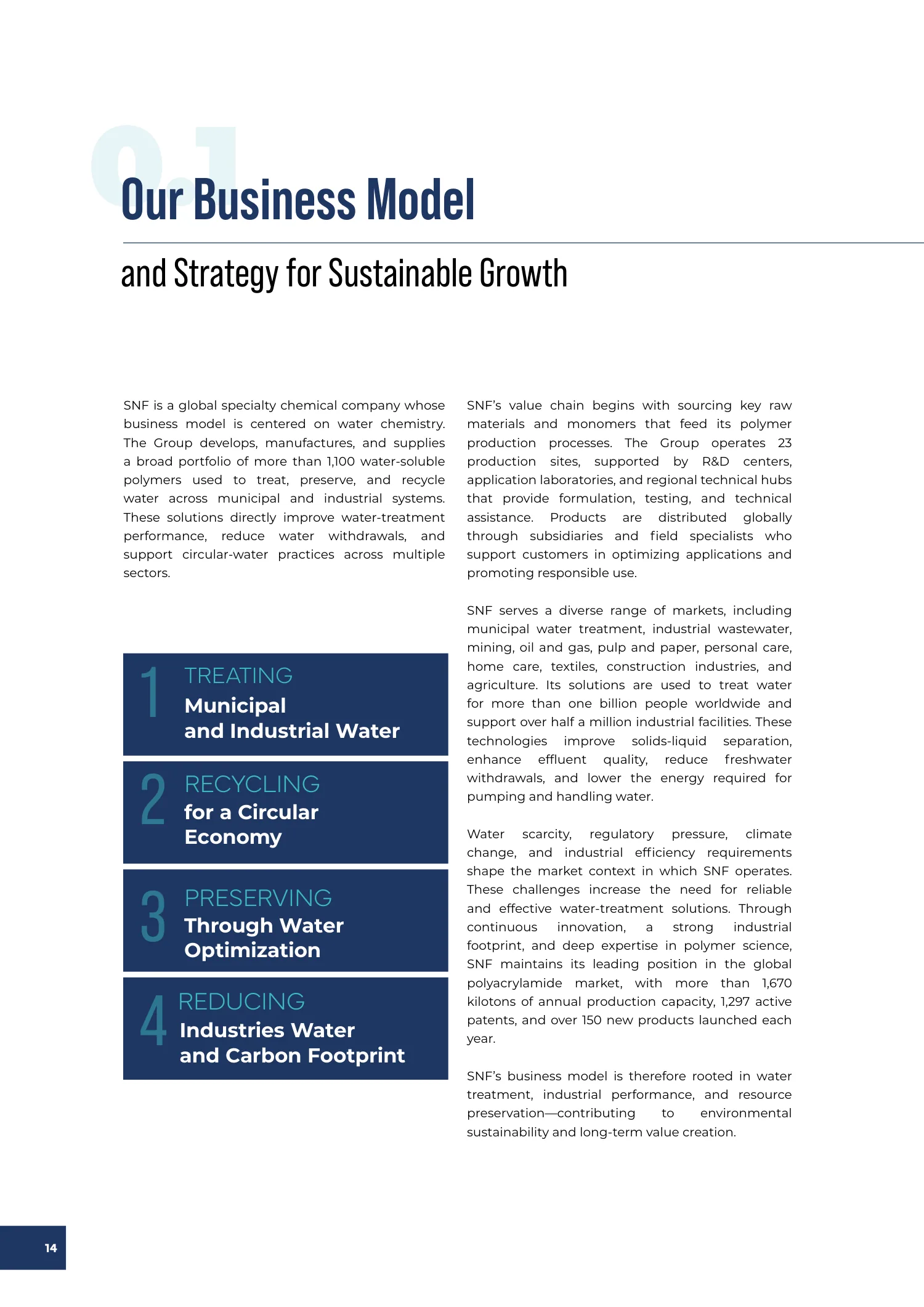
1 TREATING Municipal and Industrial Water 2 RECYCLING for a Circular Economy 3 PRESERVING Through Water Optimization 4 REDUCING Industries Water and Carbon Footprint
SNF’s value chain begins with sourcing key raw materials and monomers that feed its polymer production processes. The Group operates 23 production sites, supported by R&D centers, application laboratories, and regional technical hubs that provide formulation, testing, and technical assistance. Products are distributed globally through subsidiaries and field specialists who support customers in optimizing applications and promoting responsible use.
SNF serves a diverse range of markets, including municipal water treatment, industrial wastewater, mining, oil and gas, pulp and paper, personal care, home care, textiles, construction industries, and agriculture. Its solutions are used to treat water for more than one billion people worldwide and support over half a million industrial facilities. These technologies improve solids-liquid separation, enhance effluent quality, reduce freshwater withdrawals, and lower the energy required for pumping and handling water.
Water scarcity, regulatory pressure, climate change, and industrial efficiency requirements shape the market context in which SNF operates. These challenges increase the need for reliable and effective water-treatment solutions. Through continuous innovation, a strong industrial footprint, and deep expertise in polymer science, SNF maintains its leading position in the global polyacrylamide market, with more than 1,670 kilotons of annual production capacity, 1,297 active patents, and over 150 new products launched each year.
SNF’s business model is therefore rooted in water treatment, industrial performance, and resource preservation-contributing to environmental sustainability and long-term value creation.
Report page 15
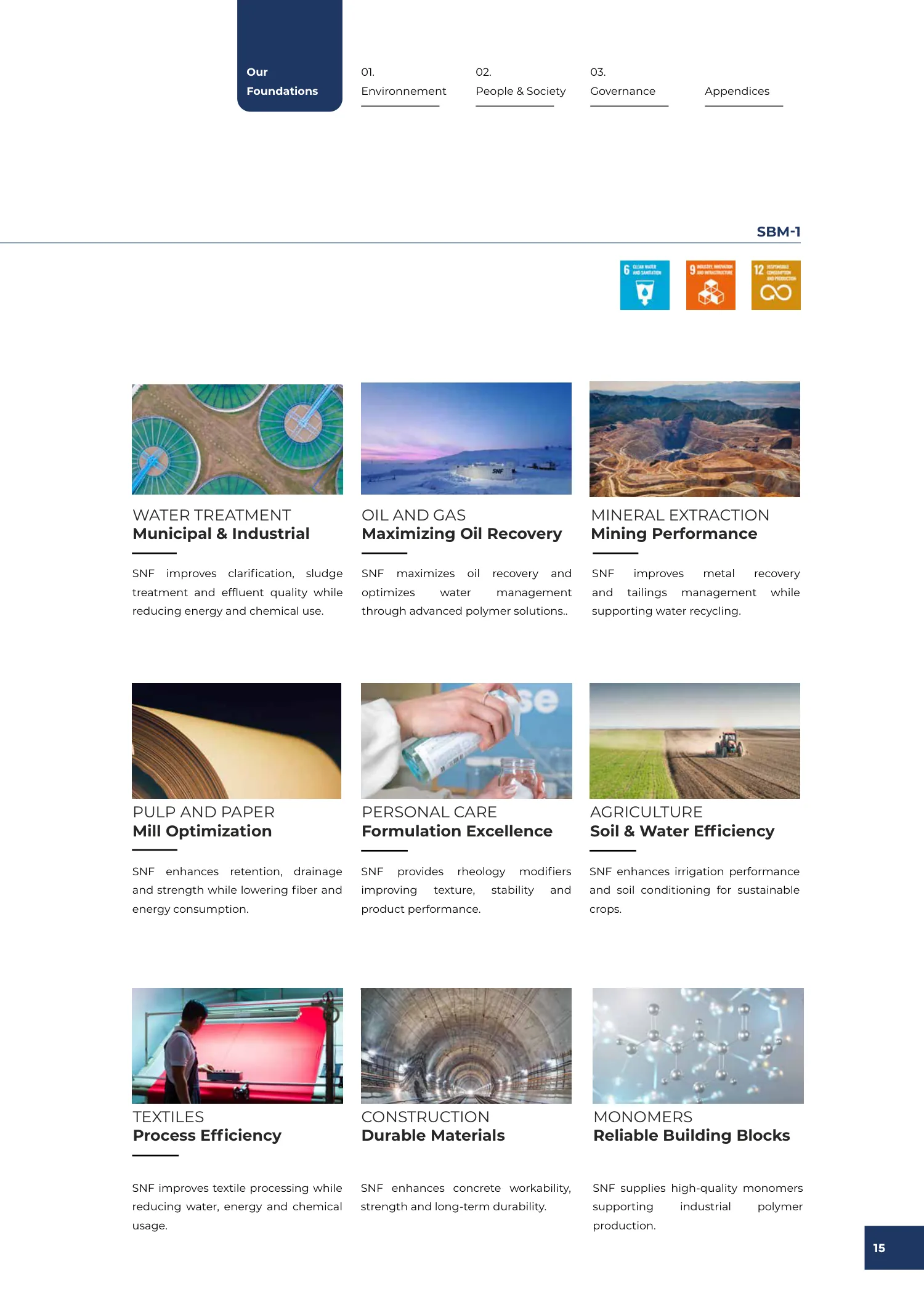
WATER TREATMENT Municipal & Industrial
SNF improves clarification, sludge treatment and effluent quality while reducing energy and chemical use.
PULP AND PAPER Mill Optimization
SNF enhances retention, drainage and strength while lowering fiber and energy consumption.
TEXTILES Process Efficiency
SNF improves textile processing while reducing water, energy and chemical usage.
OIL AND GAS Maximizing Oil Recovery
SNF maximizes oil recovery and optimizes water management through advanced polymer solutions..
PERSONAL CARE Formulation Excellence
SNF provides rheology modifiers improving texture, stability and product performance.
CONSTRUCTION Durable Materials
SNF enhances concrete workability, strength and long-term durability.
SBM-1
MINERAL EXTRACTION Mining Performance
SNF improves metal recovery and tailings management while supporting water recycling.
AGRICULTURE Soil & Water Efficiency
SNF enhances irrigation performance and soil conditioning for sustainable crops.
MONOMERS Reliable Building Blocks
SNF supplies high-quality monomers supporting industrial polymer production.
Report page 16
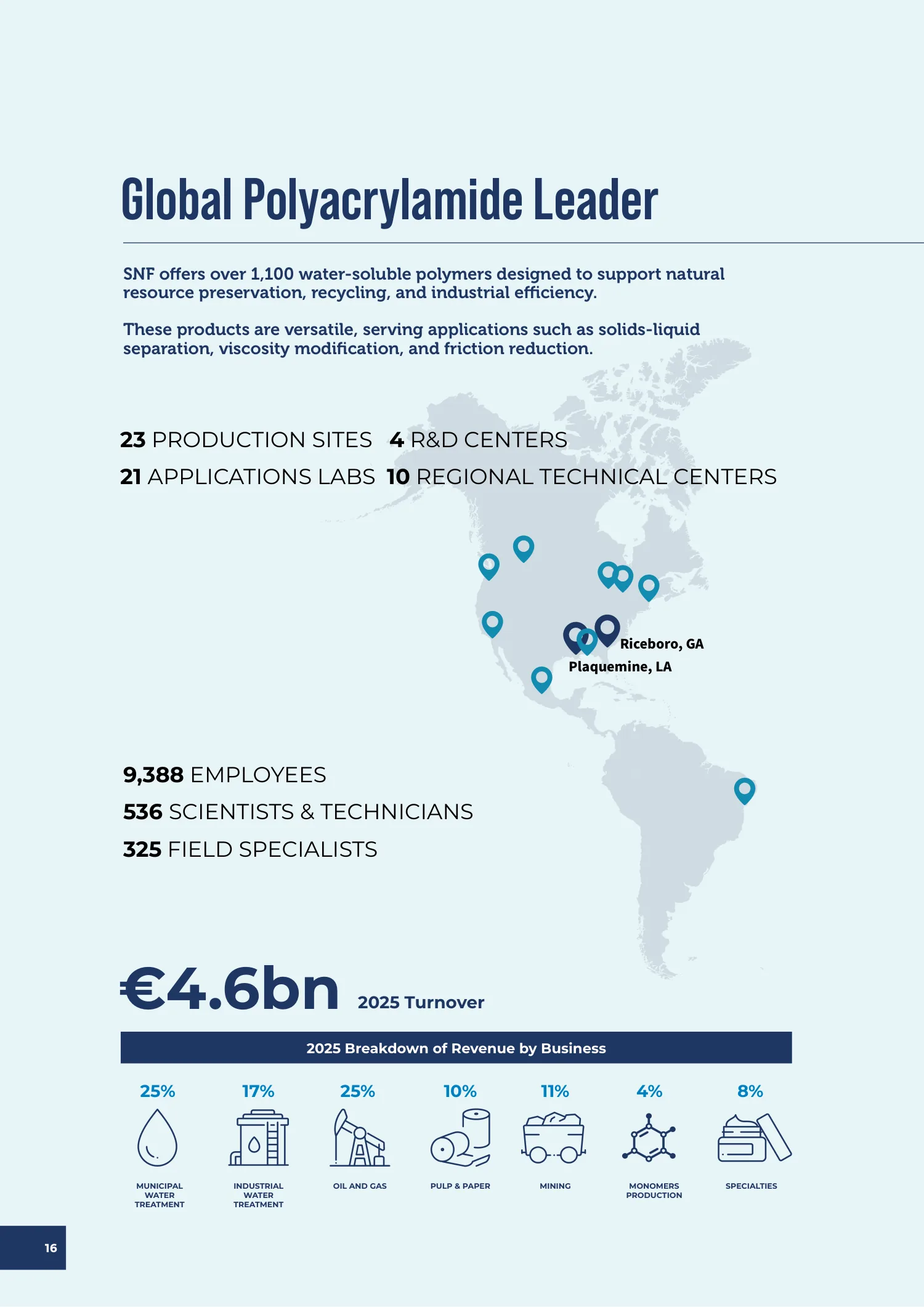
Global Polyacrylamide Leader
SNF offers over 1,100 water-soluble polymers designed to support natural resource preservation, recycling, and industrial efficiency.
These products are versatile, serving applications such as solids-liquid separation, viscosity modification, and friction reduction.
23 PRODUCTION SITES 4 R&D CENTERS
21 APPLICATIONS LABS 10 REGIONAL TECHNICAL CENTERS
9,388 EMPLOYEES
536 SCIENTISTS & TECHNICIANS
325 FIELD SPECIALISTS
Riceboro, GA Plaquemine, LA
€4.6bn 2025 Turnover
2025 Breakdown of Revenue by Business
25% MUNICIPAL WATER TREATMENT 17% INDUSTRIAL WATER TREATMENT 10% PULP & PAPER 25% OIL AND GAS 11% MINING 4% MONOMERS PRODUCTION 8% SPECIALTIES
Report page 17
SBM-1
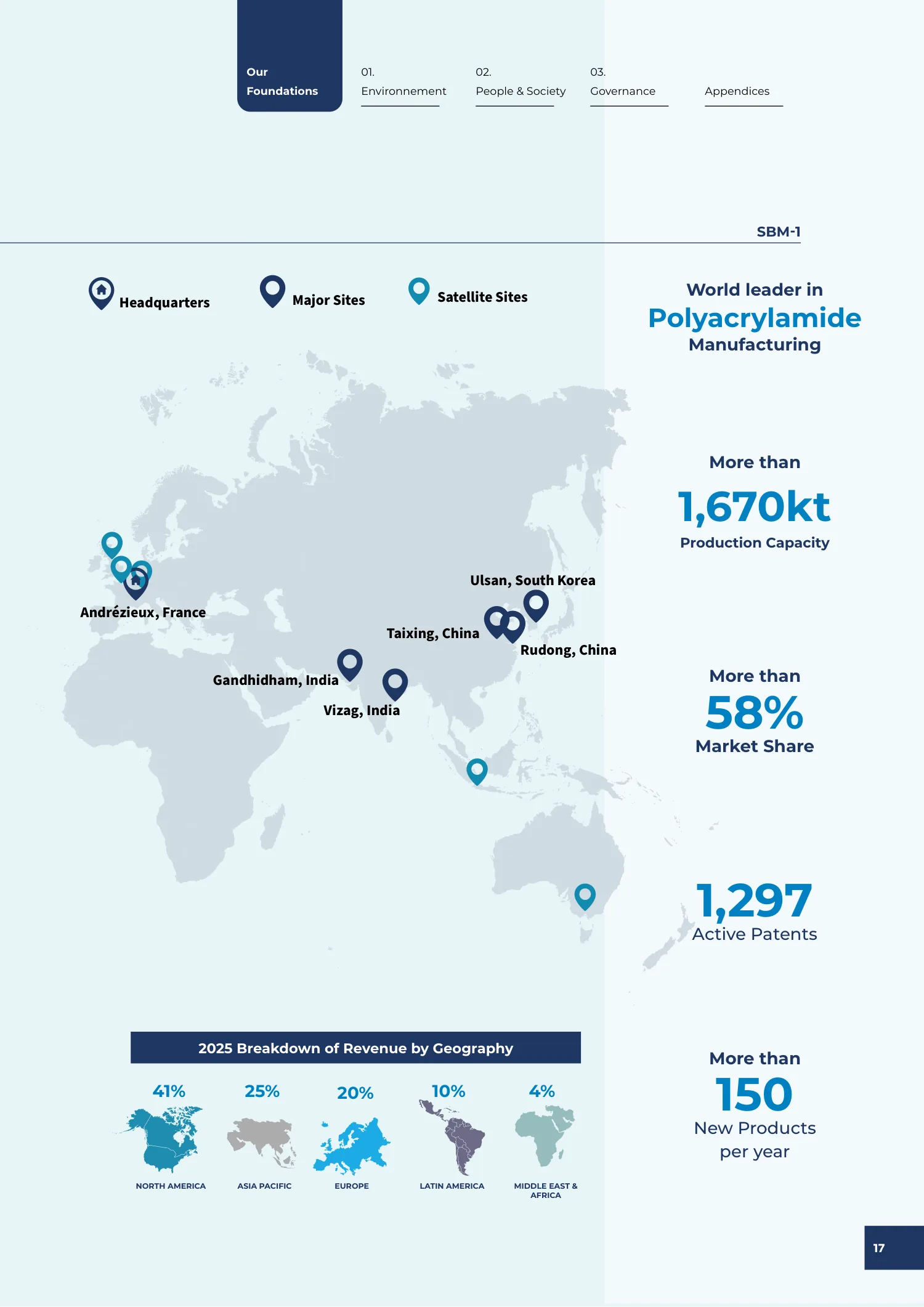
Major Sites Headquarters Satellite Sites World leader in Polyacrylamide Manufacturing
Ulsan, South Korea
Andrézieux, France
Gandhidham, India
Taixing, China Rudong, China
Vizag, India
More than 1,670kt Production Capacity
More than 58% Market Share
2025 Breakdown of Revenue by Geography
41% NORTH AMERICA 25% ASIA PACIFIC 10% LATIN AMERICA 20%EUROPE 4% MIDDLE EAST & AFRICA
1,297 Active Patents
More than 150 New Products per year
Report page 18
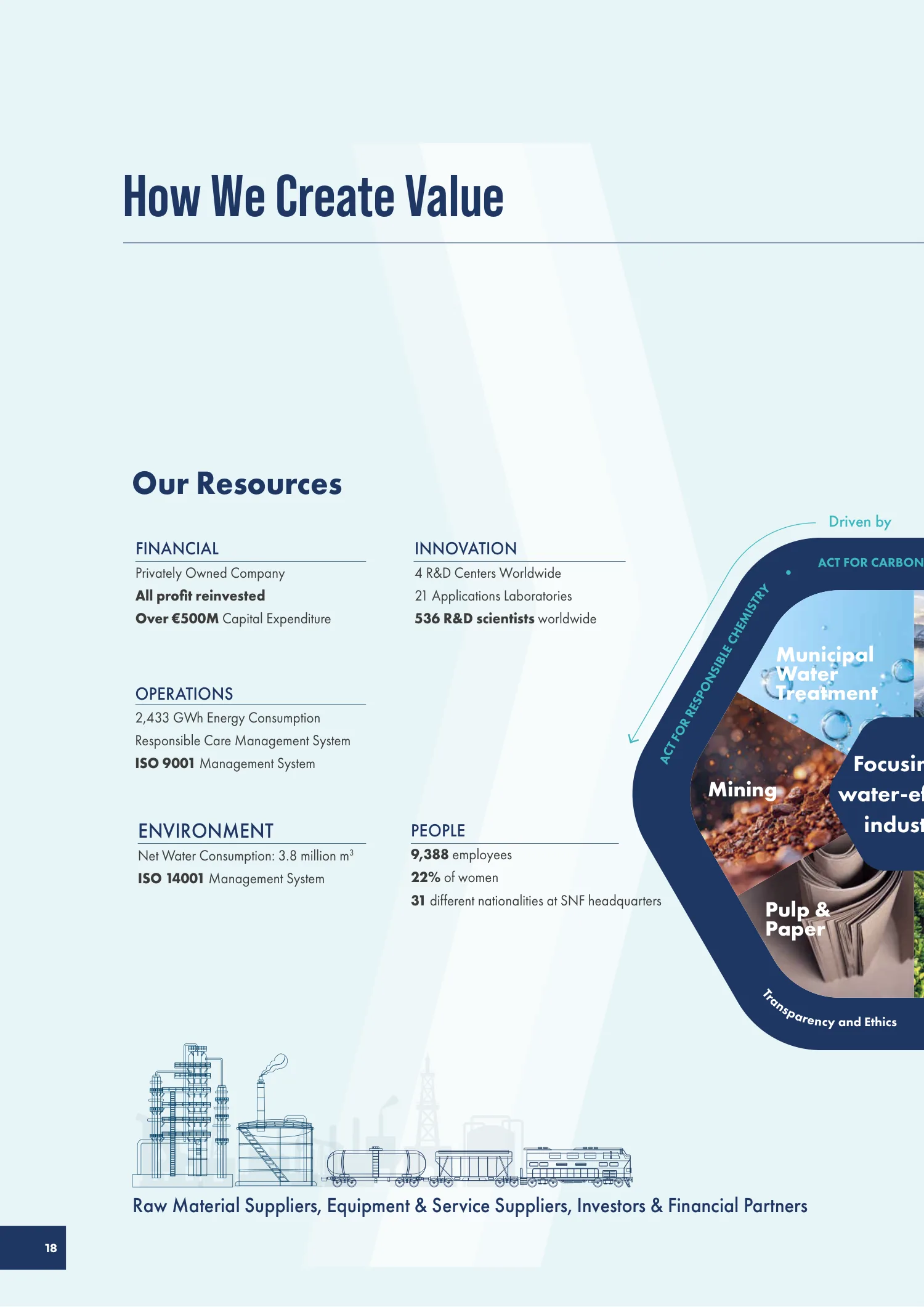
How We Create Value
Our Resources
FINANCIAL
- Privately Owned Company
- All profit reinvested
- Over €500M Capital Expenditure
OPERATIONS
- 2,433 GWh Energy Consumption
- Responsible Care Management System
- ISO 9001 Management System
ENVIRONMENT
- Net Water Consumption: 3.8 million m3
- ISO 14001 Management System
INNOVATION
- 4 R&D Centers Worldwide
- 21 Applications Laboratories
- 536 R&D scientists worldwide
PEOPLE
- 9,388 employees
- 22% of women
- 31 different nationalities at SNF headquarters
Raw Material Suppliers, Equipment & Service Suppliers, Investors & Financial Partners
Report page 19
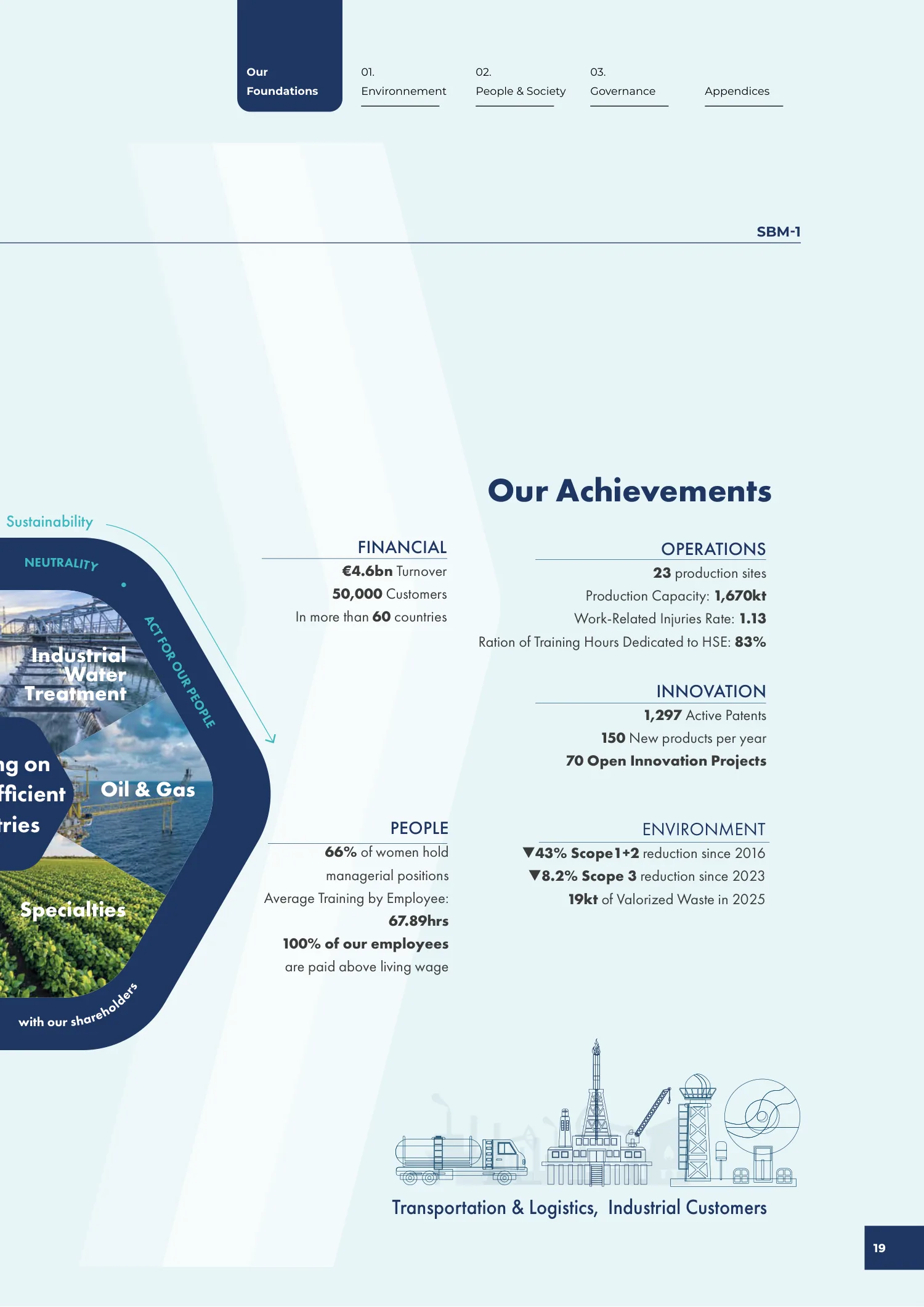
Our Achievements
FINANCIAL
- €4.6bn Turnover
- 50,000 Customers In more than 60 countries
PEOPLE
- 66% of women hold managerial positions
- Average Training by Employee: 67.89hrs
- 100% of our employees are paid above living wage
OPERATIONS
- 23 production sites
- Production Capacity: 1,670kt
- Work-Related Injuries Rate: 1.13
- Ration of Training Hours Dedicated to HSE: 83%
INNOVATION
- 1,297 Active Patents
- 150 New products per year
- 70 Open Innovation Projects
ENVIRONMENT
- ▼43% Scope1+2 reduction since 2016
- ▼8.2% Scope 3 reduction since 2023
- 19kt of Valorized Waste in 2025
Transportation & Logistics, Industrial Customers
Report page 20
Our Sustainability Strategy
ACT For Program
Our ESG strategy is more than words; it is a sustained commitment to aligning SNF’s business with society’s needs and the planet’s urgent challenges.
Since launching our ACT FOR Program in 2023, we have taken concrete steps to address critical issues in health and safety, diversity and inclusion, talent development, and environmental sustainability. The world around us continues to change rapidly, and we are evolving to meet these changes by reinforcing our commitments and accelerating our initiatives.
As industry leaders, we recognize our responsibility to push the boundaries of ethical water chemistry and strive for a more sustainable future. This is not only our purpose-it’s our promise.
ACT FOR reflects SNF’s ambition to set the standard for responsible chemical production and environmental stewardship.
Guided by our purpose, we focus on three strategic pillars that drive our daily operations and long-term goals:
• Promoting Responsible Chemistry - We are committed to developing and applying chemical solutions that prioritize safety, reduce environmental impact, and support sustainable practices across industries.
• Reimagining Low-Carbon Manufacturing -Through continuous innovation, we refine our manufacturing processes to lower our carbon footprint, improve energy efficiency, and incorporate renewable resources.
• Caring for People Across the Value Chain - We foster a culture of safety, respect, and growth for our employees, partners, and communities, in order to ensure an inclusive and supportive environment.
Over the past year, our mission has driven us to initiate clear actions in production, reuse, and recycling. As we build on the foundation of the ACT FOR Program, we remain committed to adapting and improving our practices to meet the demands of a changing world.
This strategy is more than an aspiration-it is who we are. It defines our ambition, brings meaning to our work, and reflects our ongoing commitment to a bright, sustainable future.
Report page 21
SBM-1
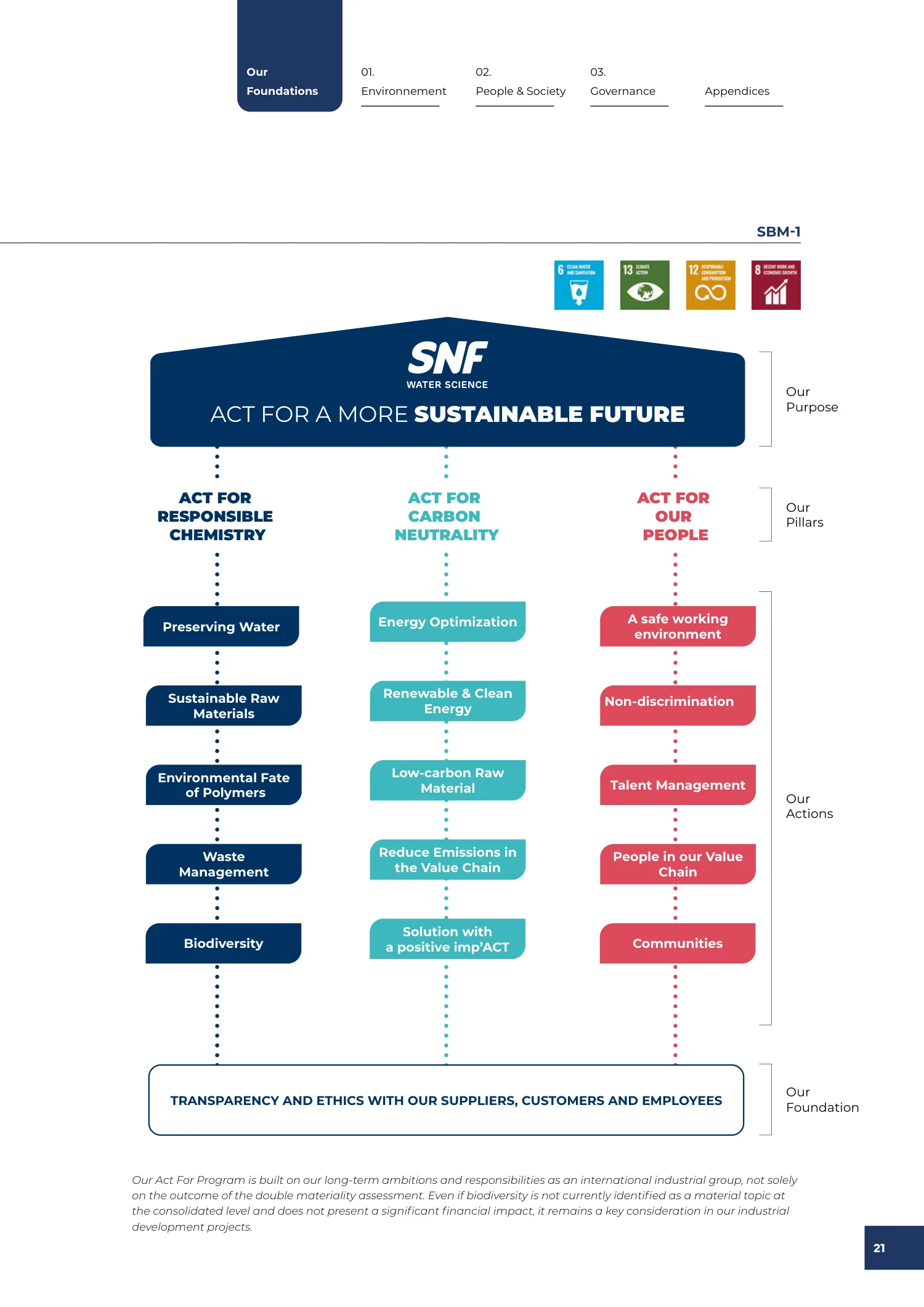
ACT FOR A MORE SUSTAINABLE FUTURE
ACT FOR RESPONSIBLE CHEMISTRY
Preserving Water
Sustainable Raw Materials
Environmental Fate of Polymers
Waste Management
Biodiversity
ACT FOR CARBON NEUTRALITY
Energy Optimization
Renewable & Clean Energy
Low-carbon Raw Material
Reduce Emissions in the Value Chain
Solution with a positive imp’ACT
ACT FOR OUR PEOPLE
A safe working environment
Non-discrimination
Talent Management
People in our Value Chain
Communities
TRANSPARENCY AND ETHICS WITH OUR SUPPLIERS, CUSTOMERS AND EMPLOYEES
Our Foundation
Our Act For Program is built on our long-term ambitions and responsibilities as an international industrial group, not solely on the outcome of the double materiality assessment. Even if biodiversity is not currently identified as a material topic at the consolidated level and does not present a significant financial impact, it remains a key consideration in our industrial development projects.
Report page 22
Our Commitment and Ratings
Since 2008, SNF has been progressively integrating the Ten Principles of the United Global Compact into its policies; we have even included some Sustainable Development Goals (SDGs) in our key indicators.
As an active member of the Global Compact, SNF Group is committed to respecting the universal principles of human rights, labor, and the environment, as well as the fight against corruption in its operations and strategies. This ongoing commitment is published in a Communication on Progress (COP) on the SNF and Global Compact websites.
SNF Group demonstrates its commitment to utilizing all resources at its disposal responsibly; and by integrating fundamental sustainable development principles into all our operations; we conduct business in a way that respects people and the environment in cooperation with our partners.
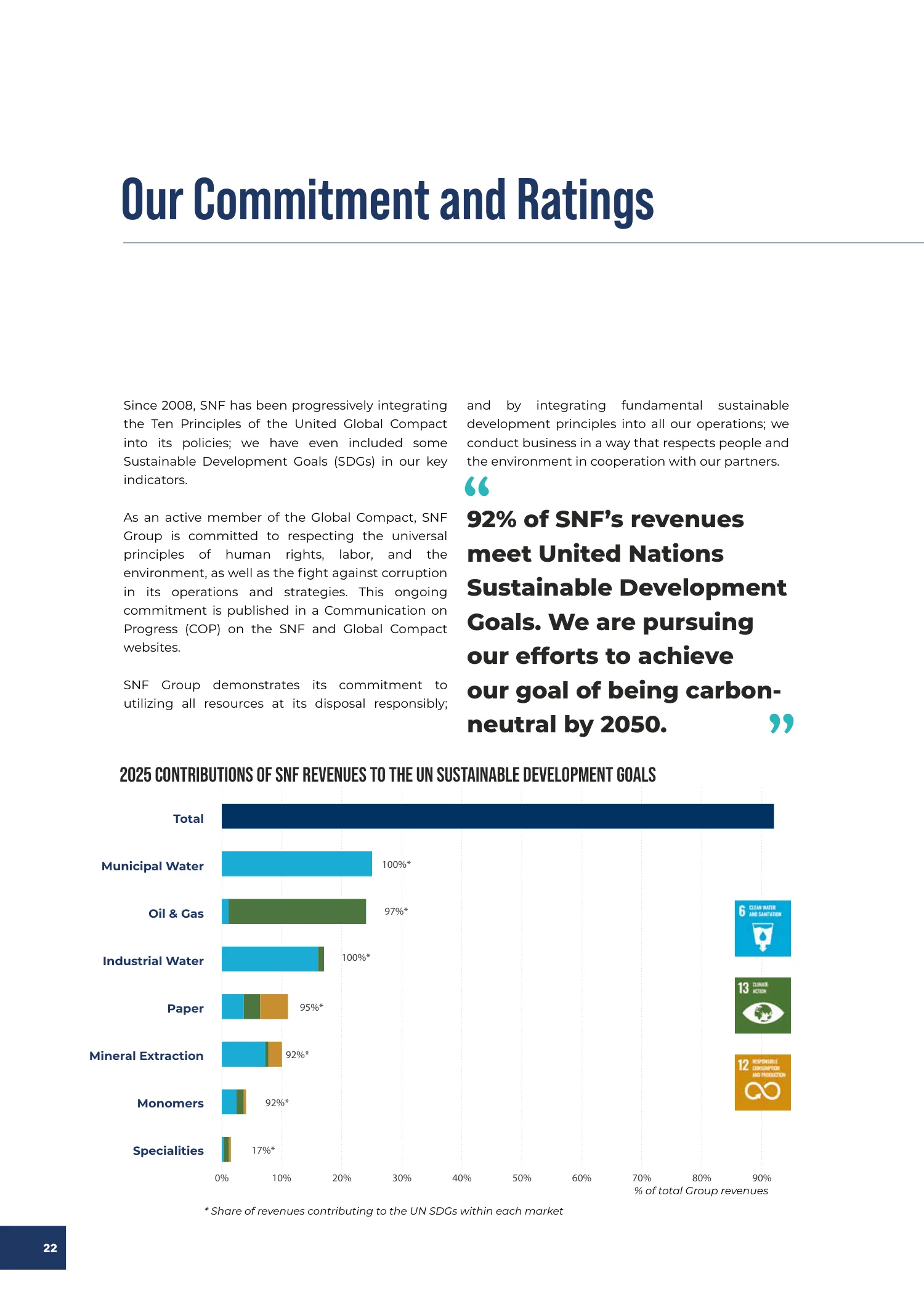
“ 92% of SNF’s revenues meet United Nations Sustainable Development Goals. We are pursuing our efforts to achieve our goal of being carbon-neutral by 2050. “
Report page 23
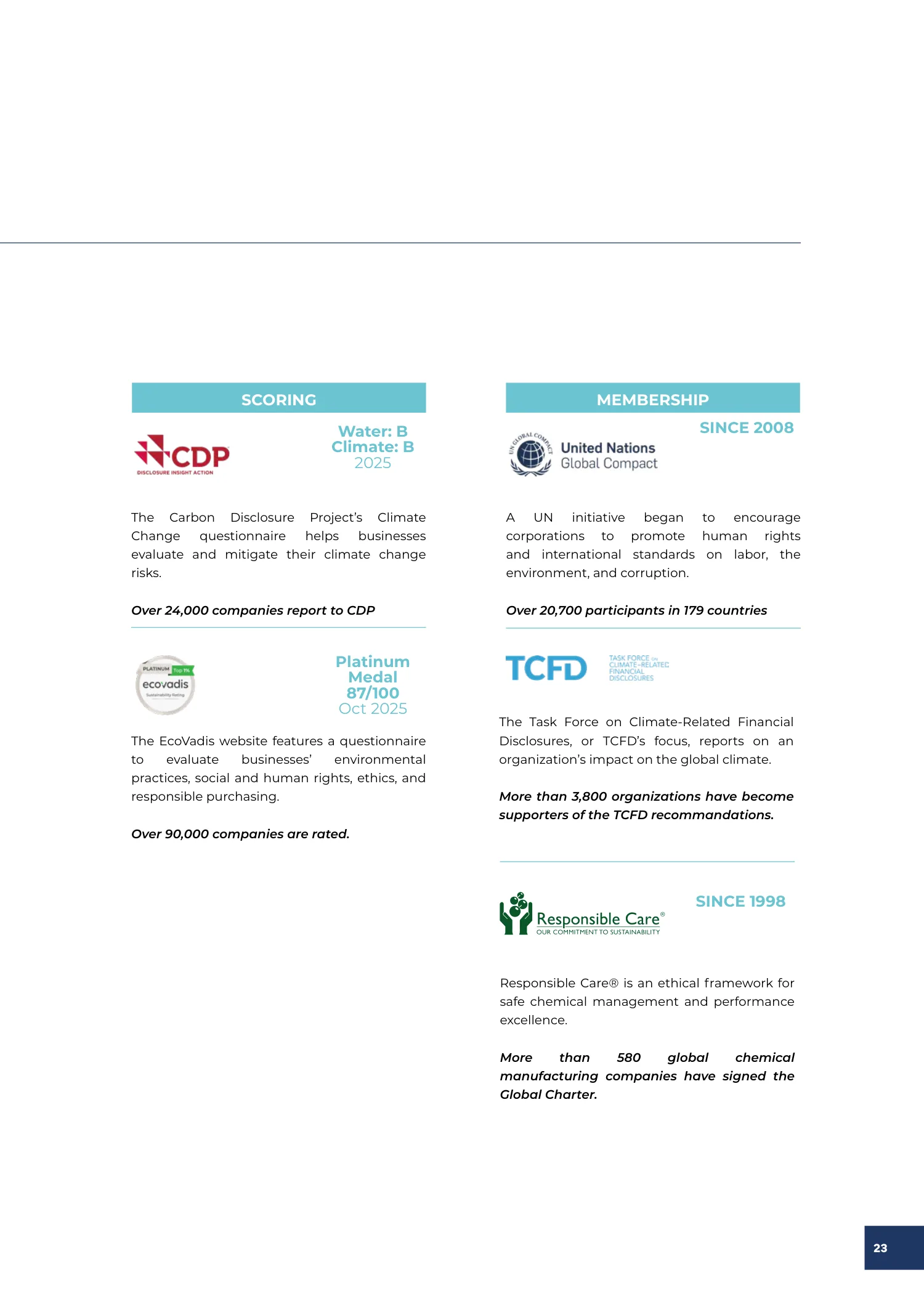
SCORING
Carbon Disclosure Project
2025 Water: B Climate: B The Carbon Disclosure Project’s Climate Change questionnaire helps businesses evaluate and mitigate their climate change risks. Over 24,000 companies report to CDP
ECOVADIS Oct 2025 Platinum Medal 87/100 The EcoVadis website features a questionnaire to evaluate businesses’ environmental practices, social and human rights, ethics, and responsible purchasing. Over 90,000 companies are rated.
United Nations Global Compact Since 2008 A UN initiative began to encourage corporations to promote human rights and international standards on labor, the environment, and corruption. Over 20,700 participants in 179 countries
Task Force on Climate-Related Financial Disclosures Reports on an organization’s impact on the global climate. More than 3,800 organizations have become supporters of the TCFD recommandations.
Responsible Care® SINCE 1998 Responsible Care® is an ethical framework for safe chemical management and performance excellence. More than 580 global chemical manufacturing companies have signed the Global Charter.
Report page 24
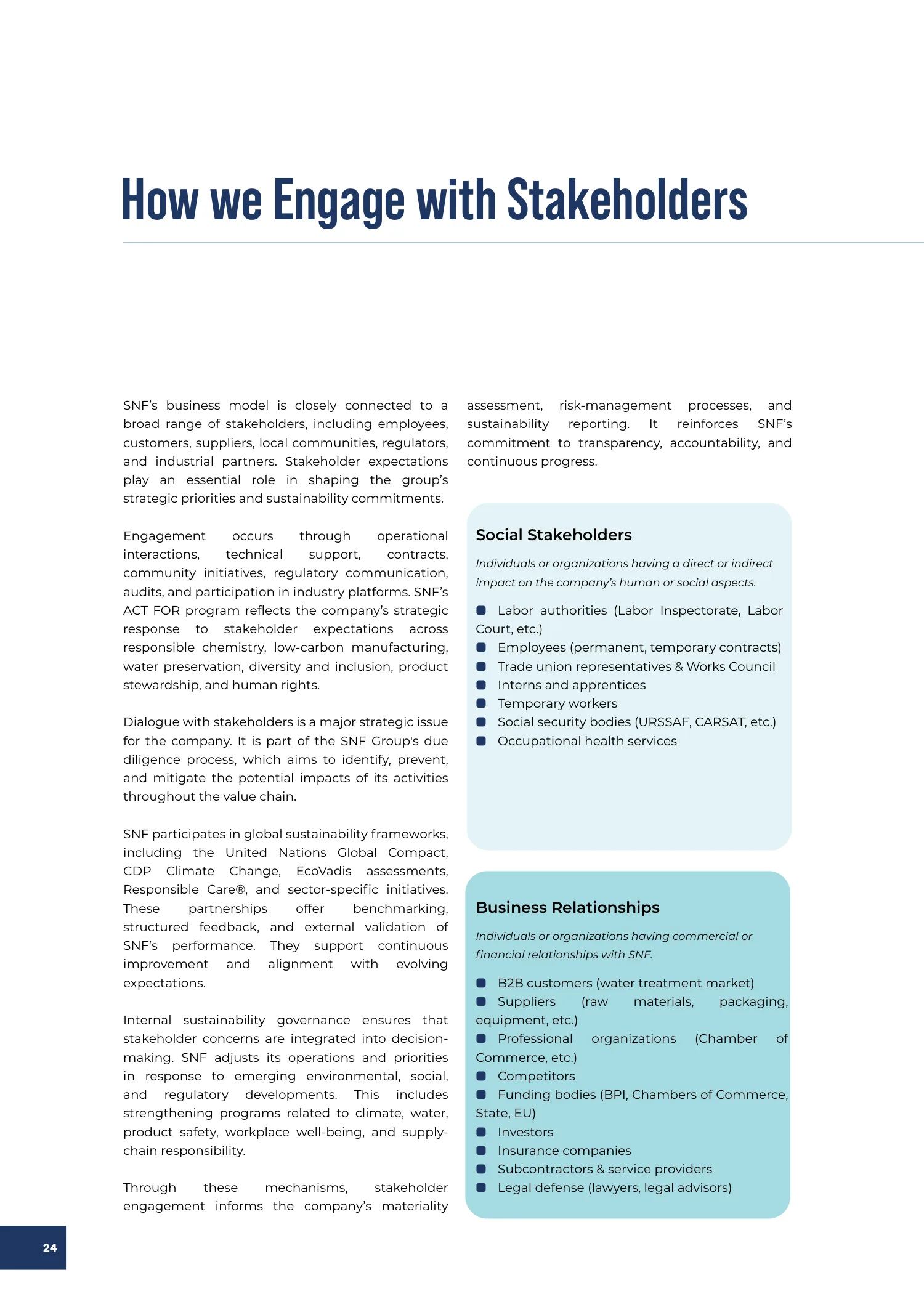
How we Engage with Stakeholders
SNF’s business model is closely connected to a broad range of stakeholders, including employees, customers, suppliers, local communities, regulators, and industrial partners. Stakeholder expectations play an essential role in shaping the group’s strategic priorities and sustainability commitments.
Engagement occurs through operational interactions, technical support, contracts, community initiatives, regulatory communication, audits, and participation in industry platforms. SNF’s ACT FOR program reflects the company’s strategic response to stakeholder expectations across responsible chemistry, low-carbon manufacturing, water preservation, diversity and inclusion, product stewardship, and human rights.
Dialogue with stakeholders is a major strategic issue for the company. It is part of the SNF Group's due diligence process, which aims to identify, prevent, and mitigate the potential impacts of its activities throughout the value chain.
SNF participates in global sustainability frameworks, including the United Nations Global Compact, CDP Climate Change, EcoVadis assessments, Responsible Care®, and sector-specific initiatives. These partnerships offer benchmarking, structured feedback, and external validation of SNF’s performance. They support continuous improvement and alignment with evolving expectations.
Internal sustainability governance ensures that stakeholder concerns are integrated into decision-making. SNF adjusts its operations and priorities in response to emerging environmental, social, and regulatory developments. This includes strengthening programs related to climate, water, product safety, workplace well-being, and supply-chain responsibility.
Through these mechanisms, stakeholder engagement informs the company’s materiality assessment, risk-management processes, and sustainability reporting. It reinforces SNF’s commitment to transparency, accountability, and continuous progress.
Social Stakeholders
Individuals or organizations having a direct or indirect impact on the company’s human or social aspects. • Labor authorities (Labor Inspectorate, Labor Court, etc.) • Employees (permanent, temporary contracts) • Trade union representatives & Works Council • Interns and apprentices • Temporary workers • Social security bodies (URSSAF, CARSAT, etc.) • Occupational health services
Business Relationships
Individuals or organizations having commercial or financial relationships with SNF. • B2B customers (water treatment market) • Suppliers (raw materials, packaging, equipment, etc.) • Professional organizations (Chamber of Commerce, etc.) • Competitors • Funding bodies (BPI, Chambers of Commerce, State, EU) • Investors • Insurance companies • Subcontractors & service providers • Legal defense (lawyers, legal advisors)
Report page 25
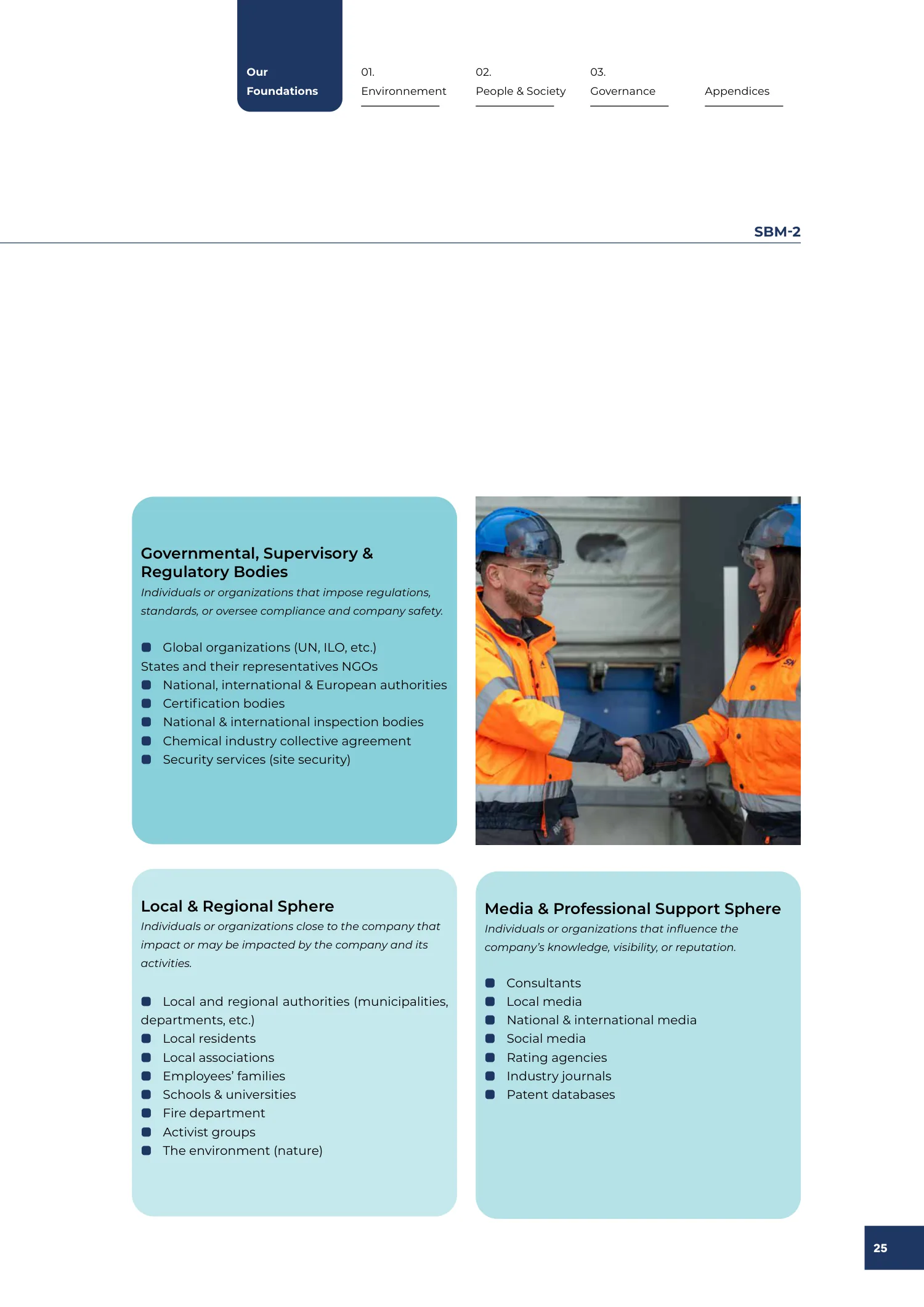
Governmental, Supervisory & Regulatory Bodies Individuals or organizations that impose regulations, standards, or oversee compliance and company safety.
• Global organizations (UN, ILO, etc.) States and their representatives NGOs
• National, international & European authorities
• Certification bodies
• National & international inspection bodies
• Chemical industry collective agreement
• Security services (site security)
Local & Regional Sphere Individuals or organizations close to the company that impact or may be impacted by the company and its activities.
• Local and regional authorities (municipalities, departments, etc.)
• Local residents
• Local associations
• Employees’ families
• Schools & universities
• Fire department
• Activist groups
• The environment (nature)
SBM-2
Media & Professional Support Sphere Individuals or organizations that influence the company’s knowledge, visibility, or reputation.
• Consultants
• Local media
• National & international media
• Social media
• Rating agencies
• Industry journals
• Patent databases
4 pages0.2 Strong Governance for Responsible Business
SNF's private ownership structure supports long-term reinvestment and aligns management with the Group's purpose. The governance framework defines Board oversight, executive responsibilities, ESG reporting, risk monitoring, and the experience and skills of Board members.
Accessible text version of this section
Report page 26
0.2 Strong Governance
for Reponsible Business
SNF, headquartered in Andrézieux, France, operates as a private company under the ownership of an irrevocable US-based trust, with potential beneficiaries being charities. The company’s shares are non-negotiable, illiquid, and devoid of economic value. Thanks to this unique structure, management’s interests are directly aligned with those of the Group, resulting in a streamlined corporate governance framework. Moreover, SNF has a long-standing policy of not distributing dividends and intends to perpetuate this practice. All generated cash flow is consistently reinvested within the Group.
Roles & Oversight
SNF’s governance structure assigns sustainability oversight to the highest levels of leadership. The Board of Directors is responsible for defining long-term strategic orientations, approving major decisions, and ensuring that environmental, social, and governance (ESG) priorities are integrated into corporate strategy.
The Board regularly reviews sustainability matters, including progress on climate objectives, environmental compliance, product stewardship, occupational safety, and supply-chain responsibility. As part of its oversight duties, the Board monitors the alignment of SNF’s strategic initiatives with regulatory expectations, stakeholder concerns, and industry trends.
The Chairman & Chief Executive Officer leads the executive management team, which is responsible for implementing the strategy approved by the Board and for overseeing the Group’s operational execution. The executive management team ensures that adequate resources, governance processes, and internal controls support SNF’s sustainability commitments.
The Corporate Social Responsibility (CSR) and Risk Management functions monitor ESG-related risks, consolidate non-financial information, and provide regular updates to senior leadership and the Board. Subsidiaries apply Group policies at local level, ensuring that ethical, environmental, and social standards are respected across SNF’s global operations.
Through this governance system, SNF ensures effective integration of sustainability considerations into strategic decision-making and operational execution.
Skills, Supervision & Sustainability Information Flow
SNF’s Board of Directors possesses the expertise needed to oversee the company’s sustainability commitments. Their experience in chemistry, industrial operations, finance, compliance, and corporate leadership enables them to evaluate how environmental, social, and governance matters influence SNF’s long-term performance. The Board provides strategic direction and ensures that sustainability considerations are embedded into major decisions. At the same time, the executive management team is responsible for translating these orientations into operational practice across the Group.
SNF maintains structured information flows to ensure that governing bodies receive timely, accurate, and relevant sustainability information. The Corporate Social Responsibility and Risk Management functions monitor environmental, social, and safety performance indicators and consolidate non-financial data across sites. These teams regularly communicate their findings to the Board, enabling the Board to assess progress, identify risks, and support decision-making. These processes are supported by the internal control and validation framework described in SNF’s reporting
Report page 27
methodology, ensuring the consistency and reliability of ESG information.
Supervision of sustainability matters includes routine reviews of risk registers, evaluations of environmental and safety performance, compliance analyses, and follow-up on the Group’s climate- and sustainability-related objectives. To strengthen internal capabilities, SNF provides ESG awareness and training to employees across regions, ensuring the workforce understands the Group’s sustainability strategy and the tools available to support it. Through these governance and supervision mechanisms, SNF ensures that its leadership bodies are equipped with the information and competencies required to fulfil their sustainability oversight responsibilities.
Sustainability-linked incentive
SNF integrates sustainability expectations into managerial accountability. Although the company does not disclose formal ESG-linked remuneration formulas, sustainability performance is embedded in leadership responsibilities and performance evaluations. Health, safety, and environmental protection remain core components of management oversight, with safety indicators systematically monitored under the “Safety First” culture. Sustainability topics such as energy efficiency, emissions reduction, responsible resource management, and regulatory compliance are incorporated into management reviews and operational objectives, ensuring that sustainability priorities actively support long-term value creation.
GOV-1 | GOV-3
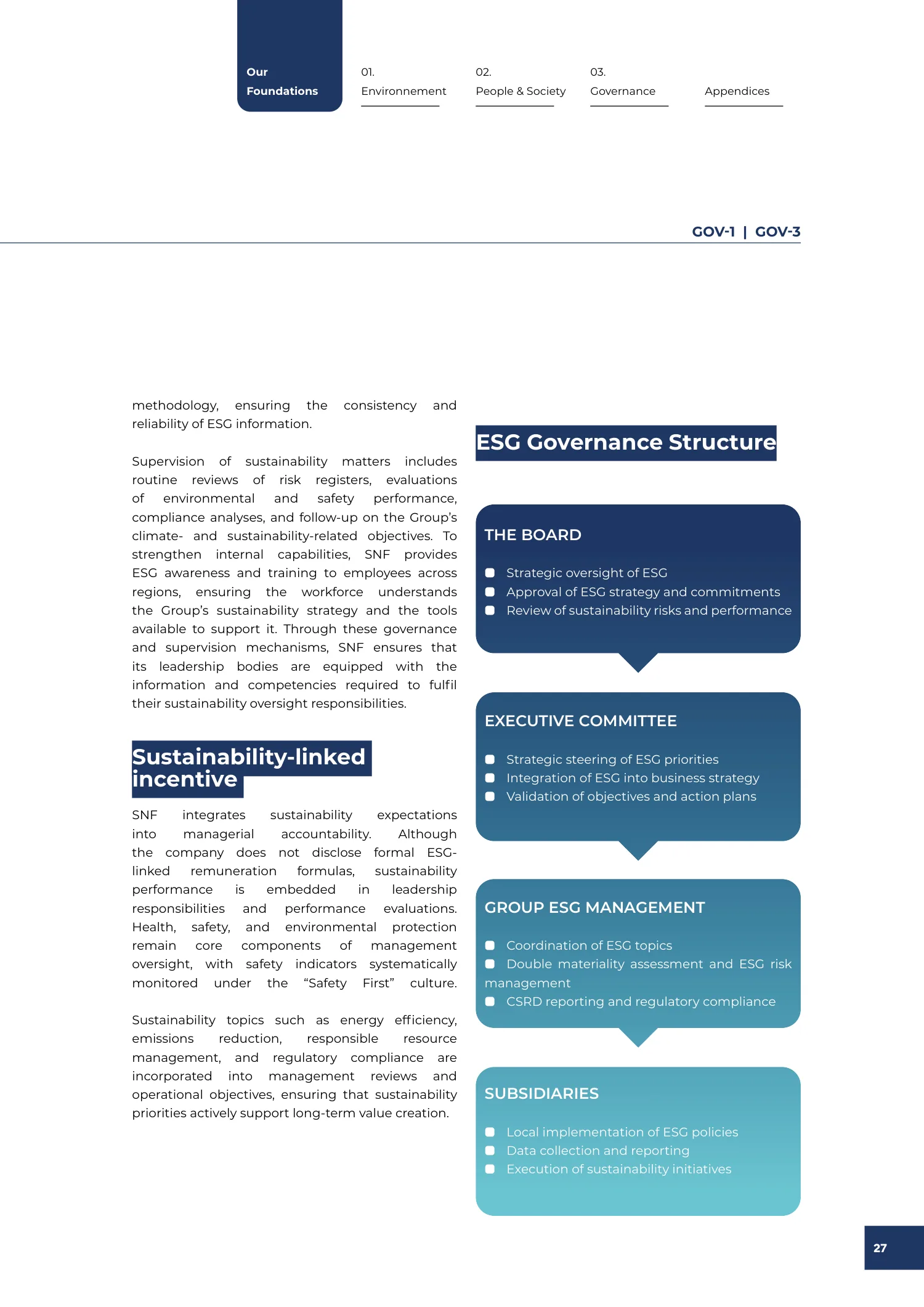
ESG Governance Structure
THE BOARD
• Strategic oversight of ESG
• Approval of ESG strategy and commitments
• Review of sustainability risks and performance
EXECUTIVE COMMITTEE
• Strategic steering of ESG priorities
• Integration of ESG into business strategy
• Validation of objectives and action plans
GROUP ESG MANAGEMENT
• Coordination of ESG topics
• Double materiality assessment and ESG risk management
• CSRD reporting and regulatory compliance
SUBSIDIARIES
• Local implementation of ESG policies
• Data collection and reporting
• Execution of sustainability initiatives
Report page 28
Board Members and Skills
SNF Group
PASCAL REMY CHAIRMAN & CEO
Pascal Remy, 65, is a graduate of the Massachusetts Institute of Technology (MIT), École Polytechnique, and École Nationale des Ponts et Chaussées. He has twenty-five years of experience in the chemical and water treatment industry. He began his career at Alcatel as head of fiber optic submarine cables. After Alcatel, he joined the Suez Group as Managing Director of Degrémont. Later, Mr. Remy was appointed Managing Director of Nalco (Ecolab Group) in the USA. In 2004, he became a partner in a Chicago-based investment fund. Pascal Remy joined SNF in December 2005 as President and member of the Board of Directors before being appointed Chairman & Chief Executive Officer in 2010.
EXPERTISE Chemistry | International | CEO | Finance
RENÉ PICH SENIOR EXECUTIVE VICE PRESIDENT
René Pich, 85, holds a degree in chemistry from the Institut de Chimie et Physique Industrielle Engineering School in Lyon, France (ICPI Lyon). He began his career as a polymerization research technician at Rhodiaceta and Streichenberger before being appointed Technical Director of Polyacrylamide at British Petroleum. In 1978, Mr. Pich founded SNF and became SNF’s first Chairman and CEO, a position he held until 2010. Since then, he has held the position of Senior Executive Vice President. Mr. Pich has been a member of the Board of Directors since 1978.
EXPERTISE Chemistry | International | CEO
LOÏC FAUCHEUR CHIEF FINANCIAL OFFICER
Loïc Faucheur, 48, Chief Financial Officer, graduated from Montpellier SupAgro with a degree in engineering and from AgroParisTech with a Master of Science in Computer Sciences. He began his career in Finance as an auditor with PricewaterhouseCoopers. Mr. Faucheur has over 20 years of experience in finance positions in consulting and Fortune Global 500 corporations (AB Volvo, Casino Group), both in France and in the US. Mr. Faucheur joined SNF in April 2011 as Group Controller and has been appointed Vice President Finance in May 2013 and Group CFO in March 2021.
EXPERTISE Chemistry | International | Finance | CSR
JOHN PITTMAN PRESIDENT OF SNF USA
John Pittman, 58, is a Georgia Institute of Technology graduate and holds an MBA from Warrington College of Business (University of Florida). He has worked in the chemicals industry for over 30 years. He began his career at Vinings (Kemira), where he held various positions before being appointed Vice President of Sales for the Mining, Oil & Gas markets. Mr. Pittman joined Solvay USA as Regional Market Director - Oil & Gas. He has been President of SNF Holding Company since 2017 and was appointed as a member of the Board of Directors in 2019.
EXPERTISE Chemistry | International | CEO
Report page 29
CAROLINE DUMOND DIRECTOR
Caroline Dumond, 54, has an engineering degree from École Polytechnique Féminine (EPF). She has held several positions as an engineer, Chief Production Officer, Chief Industrial Officer and joint venture manager including at Air Liquide. In 2016, Sciences Po Paris and the IFA (Institut Français des Administrateurs) certified her as a corporate director. Since 2018, she is CEO and founding partner of Les Premieres Sud, a business incubator promoting inclusion and women’s entrepreneurship to help start-ups innovate and grow with high social impact. She has been a member of the Board of Directors since 2003.
EXPERTISE Chemistry | CEO | CSR
VIRGINIE MALNOY CHIEF COMPLIANCE OFFICER
Virginie Malnoy, 44, earned a Master’s Degree from EDHEC Business School and a Master’s Degree from the Faculty of Law and Political Science of Nice Sophia Antipolis. She worked for 14 years for International law firms in Monaco, where her area of expertise was business law. She joined SNF in 2019 as Corporate Law Manager for SNF Group. She was appointed Chief Compliance Officer in 2022 and has been a member of the Board of Directors since 2021.
EXPERTISE International | Finance | CSR
GOV-1
RICHARD SAINT-SAUVEUR DIRECTOR
Richard Saint-Sauveur, 75, graduated from the École Supérieure de Commerce de Lille (ESC Lille) and earned an MBA from the École des Hautes Etudes Commerciales de Paris (HEC Paris). He has worked in the chemicals industry for 40 years. He has held technical, sales, and management positions at Roquette, Lafarge, Orkem, and Elfatochem. Before joining SNF in 1999 as Group Chief Procurement Officer, Mr. Saint-Sauveur ran the Acrylics Unit at Elfatochem. He has been a member of the Board of Directors since 2011.
EXPERTISE Chemistry | International
THIERRY LEMONNIER DIRECTOR
Thierry Lemonnier, 72, graduated from the Ecole Nationale Supérieure de Géologie (ENSG Nancy) and Stanford University (US). He began his career in 1979 at Total, where he held various positions, including CFO of the Refining Branch (1993-1999) and then the Chemicals Branch (2001-2006). Mr. Lemonnier then joined Arkema as Group CFO and member of the Executive Committee (2006-2018), where he served until his retirement. He was made a member of the Board of Directors in 2019.
EXPERTISE Chemistry | CEO | Finance
4 pages0.3 What Matters Most: Double Materiality and Due Diligence
SNF uses double materiality to assess how sustainability issues affect the company and how its activities affect people and the environment. The process identifies and validates material impacts, risks, and opportunities across environmental, social, and governance topics.
Accessible text version of this section
Report page 30
0.3 What Matters Most
Double Materiality and Due Diligence
How We Identify Impacts, Risks & Opportunities
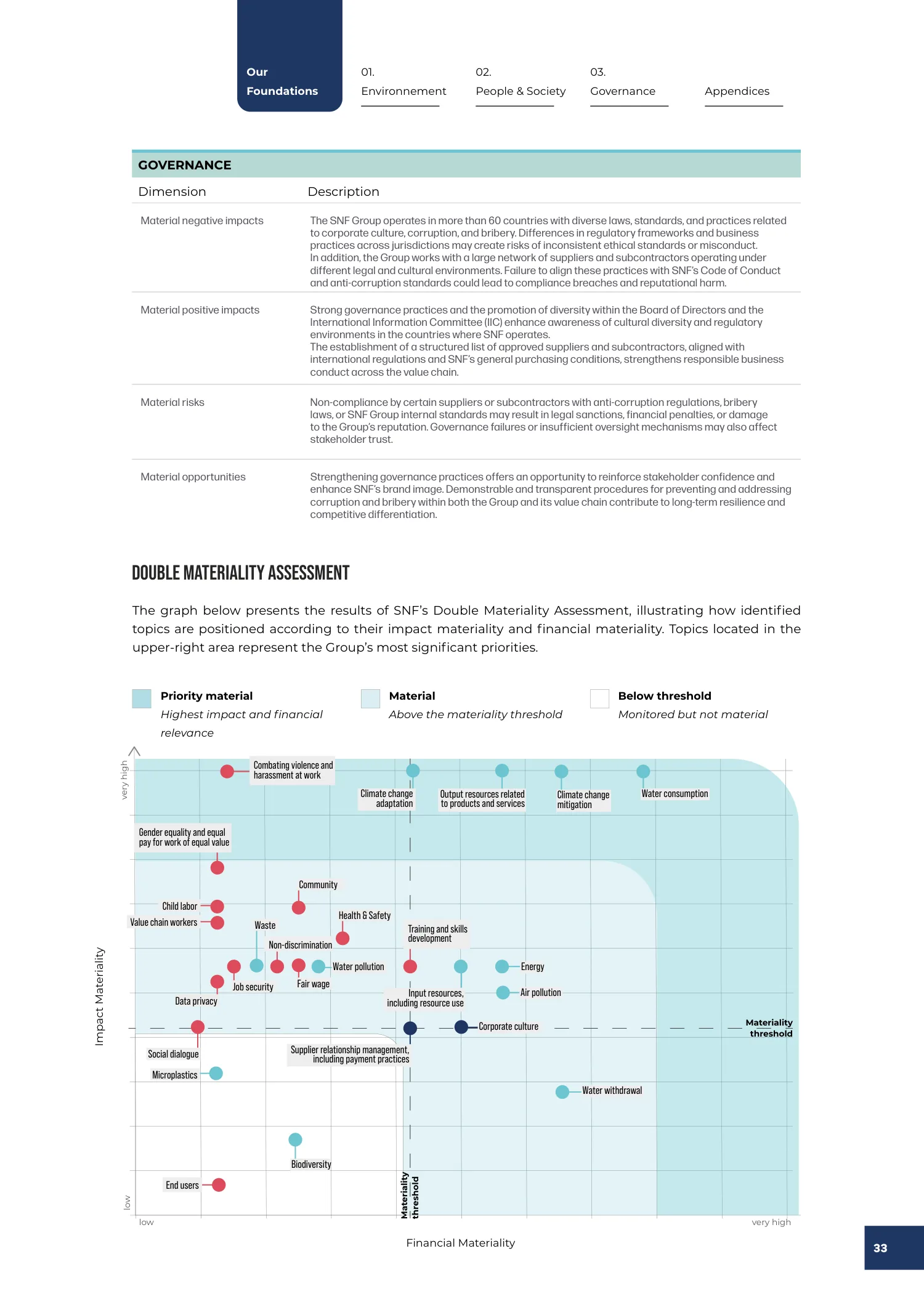
SNF conducts a Double Materiality Analysis (DMA) to identify environmental, social, and governance matters that are significant for both stakeholders and the company’s long-term resilience. The DMA covers two dimensions.
Impact materiality: SNF’s actual or potential impacts on people and the environment.
Financial materiality: Sustainability matters that may affect SNF’s financial performance, operations, or risk profile.
The methodology includes several steps:
Identification
Topics are identified based on internal operational knowledge, environmental and safety monitoring systems, stakeholder expectations, regulatory developments, and international frameworks such as the UN Global Compact and OECD guidelines.
Assessment
Each topic is evaluated based on magnitude, likelihood, duration, scale, remediability, and affected stakeholders for impact materiality, and on potential financial implications for financial materiality.
Prioritization
Topics are prioritized based on the combined assessment of impact and financial significance. This includes reviewing risk registers, operational dependencies (notably water, energy, raw materials), and the ACT FOR program’s strategic pillars.
Validation and review
The final list of material topics is validated by senior management. The DMA is reviewed regularly to reflect regulatory evolution, operational changes, and stakeholder expectations.
This methodology ensures alignment among SNF’s sustainability strategy, risk management system, and regulatory expectations under the ESRS.
Embedding ESG in Risk Management & Due Diligence
SNF applies due diligence processes across its operations and value chain to prevent, identify, and mitigate potential adverse impacts on people and the environment. These processes align with international standards, including the UN Global Compact, OECD guidelines, and the Responsible Care® framework.
The Code of Conduct sets expectations for human rights, environmental protection, workplace safety, ethical behavior, and compliance with applicable laws. The Corporate Social Responsibility and Risk Management functions monitor ESG-related risks and escalate findings to the Board.
At SNF, purchasing practices are guided by a commitment to responsibility and transparency. The company regularly assesses supplier risks and maintains an active dialogue with vendors, with particular attention to environmental performance, chemical safety, and working conditions.
Employees, contractors, and even external partners can raise concerns through a secure and confidential whistleblowing channel. This covers issues such as ethics, discrimination, health and safety, environmental impact, or breaches of
Report page 31
regulations. All reports are handled through formal internal processes, and corrective steps are taken where necessary.
Together, these practices help SNF monitor and address environmental, social, and governance risks throughout its operations and broader supply chain.
IRO-1 | GOV-4
Report page 32
Key Impacts, Risks and Strategic Opportunities SBM-3
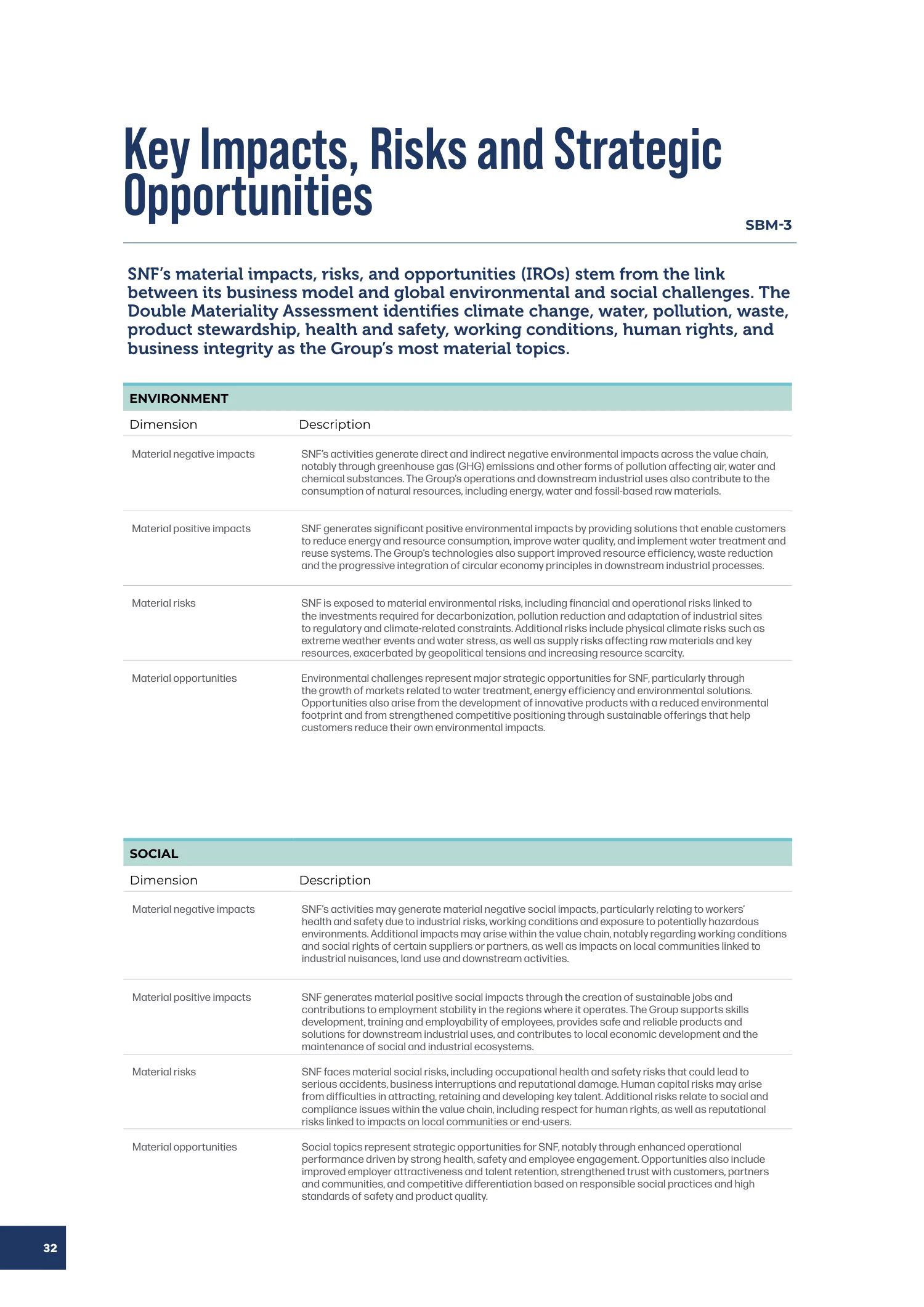
SNF’s material impacts, risks, and opportunities (IROs) stem from the link between its business model and global environmental and social challenges. The Double Materiality Assessment identifies climate change, water, pollution, waste, product stewardship, health and safety, working conditions, human rights, and business integrity as the Group’s most material topics.
ENVIRONMENT
Material negative impacts
SNF’s activities generate direct and indirect negative environmental impacts across the value chain, notably through greenhouse gas (GHG) emissions and other forms of pollution affecting air, water and chemical substances. The Group’s operations and downstream industrial uses also contribute to the consumption of natural resources, including energy, water and fossil-based raw materials.
Material positive impacts
SNF generates significant positive environmental impacts by providing solutions that enable customers to reduce energy and resource consumption, improve water quality, and implement water treatment and reuse systems. The Group’s technologies also support improved resource efficiency, waste reduction and the progressive integration of circular economy principles in downstream industrial processes.
Material risks
SNF is exposed to material environmental risks, including financial and operational risks linked to the investments required for decarbonization, pollution reduction and adaptation of industrial sites to regulatory and climate-related constraints. Additional risks include physical climate risks such as extreme weather events and water stress, as well as supply risks affecting raw materials and key resources, exacerbated by geopolitical tensions and increasing resource scarcity.
Material opportunities
Environmental challenges represent major strategic opportunities for SNF, particularly through the growth of markets related to water treatment, energy efficiency and environmental solutions. Opportunities also arise from the development of innovative products with a reduced environmental footprint and from strengthened competitive positioning through sustainable offerings that help customers reduce their own environmental impacts.
SOCIAL
Material negative impacts
SNF’s activities may generate material negative social impacts, particularly relating to workers’ health and safety due to industrial risks, working conditions and exposure to potentially hazardous environments. Additional impacts may arise within the value chain, notably regarding working conditions and social rights of certain suppliers or partners, as well as impacts on local communities linked to industrial nuisances, land use and downstream activities.
Material positive impacts
SNF generates material positive social impacts through the creation of sustainable jobs and contributions to employment stability in the regions where it operates. The Group supports skills development, training and employability of employees, provides safe and reliable products and solutions for downstream industrial uses, and contributes to local economic development and the maintenance of social and industrial ecosystems.
Material risks
SNF faces material social risks, including occupational health and safety risks that could lead to serious accidents, business interruptions and reputational damage. Human capital risks may arise from difficulties in attracting, retaining and developing key talent. Additional risks relate to social and compliance issues within the value chain, including respect for human rights, as well as reputational risks linked to impacts on local communities or end-users.
Material opportunities
Social topics represent strategic opportunities for SNF, notably through enhanced operational performance driven by strong health, safety and employee engagement. Opportunities also include improved employer attractiveness and talent retention, strengthened trust with customers, partners and communities, and competitive differentiation based on responsible social practices and high standards of safety and product quality.
Report page 33
GOVERNANCE
Material negative impacts
The SNF Group operates in more than 60 countries with diverse laws, standards, and practices related to corporate culture, corruption, and bribery. Differences in regulatory frameworks and business practices across jurisdictions may create risks of inconsistent ethical standards or misconduct. In addition, the Group works with a large network of suppliers and subcontractors operating under different legal and cultural environments. Failure to align these practices with SNF’s Code of Conduct and anti-corruption standards could lead to compliance breaches and reputational harm.
Material positive impacts
Strong governance practices and the promotion of diversity within the Board of Directors and the International Information Committee (IIC) enhance awareness of cultural diversity and regulatory environments in the countries where SNF operates. The establishment of a structured list of approved suppliers and subcontractors, aligned with international regulations and SNF’s general purchasing conditions, strengthens responsible business conduct across the value chain.
Material risks
Non-compliance by certain suppliers or subcontractors with anti-corruption regulations, bribery laws, or SNF Group internal standards may result in legal sanctions, financial penalties, or damage to the Group’s reputation. Governance failures or insufficient oversight mechanisms may also affect stakeholder trust.
Material opportunities
Strengthening governance practices offers an opportunity to reinforce stakeholder confidence and enhance SNF’s brand image. Demonstrable and transparent procedures for preventing and addressing corruption and bribery within both the Group and its value chain contribute to long-term resilience and competitive differentiation.
2 pages0.4 Policies, Actions, and Targets That Drive Our Progress
The ACT FOR program organizes policies, actions, resources, objectives, and monitoring around SNF's material sustainability topics. This section connects strategic commitments with baselines, accountable functions, measurable targets, and ongoing performance review.
Accessible text version of this section
Report page 34
0.4 Policies, actions and targets
That Drive our Progress
Policies for Each Material Topic
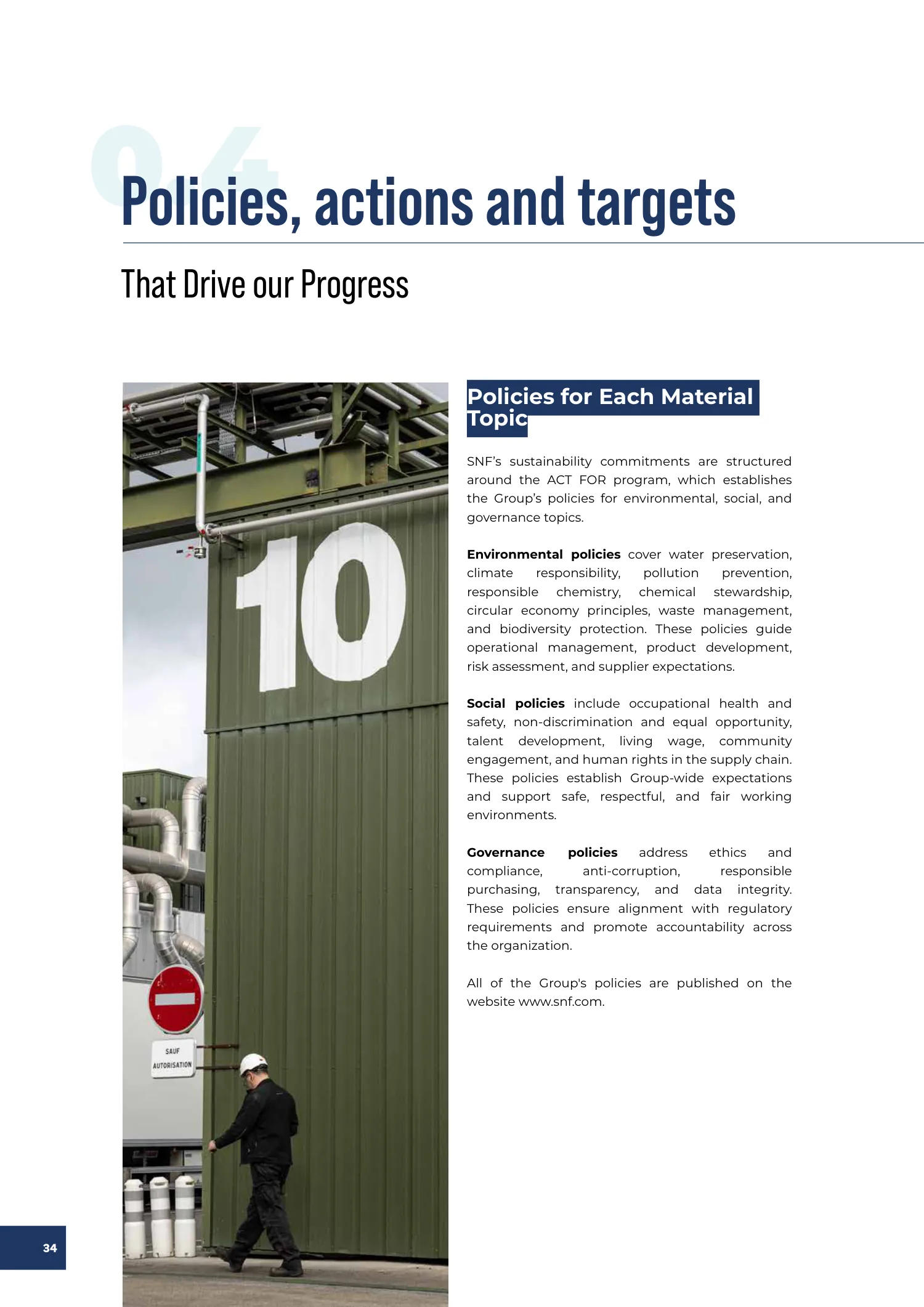
SNF’s sustainability commitments are structured around the ACT FOR program, which establishes the Group’s policies for environmental, social, and governance topics.
Environmental policies cover water preservation, climate responsibility, pollution prevention, responsible chemistry, chemical stewardship, circular economy principles, waste management, and biodiversity protection. These policies guide operational management, product development, risk assessment, and supplier expectations.
Social policies include occupational health and safety, non-discrimination and equal opportunity, talent development, living wage, community engagement, and human rights in the supply chain. These policies establish Group-wide expectations and support safe, respectful, and fair working environments.
Governance policies address ethics and compliance, anti-corruption, responsible purchasing, transparency, and data integrity. These policies ensure alignment with regulatory requirements and promote accountability across the organization.
All of the Group's policies are published on the website www.snf.com.
Report page 35
Actions and Resources Supporting the Policies
SNF implements a wide range of programs to operationalize its sustainability policies:
• Environmental actions include site-level energy-efficiency projects, renewable-energy adoption, GHG reduction initiatives, advanced wastewater-treatment practices, circular water systems, responsible chemistry projects, substitution of hazardous substances, sustainable raw-material initiatives, and product stewardship actions.
• Social actions include the deployment of the Safety First program, non-discrimination initiatives, global ESG awareness training, living-wage implementation across subsidiaries, community support programs, and supplier social assessments.
• Governance actions include compliance audits, ethical-conduct monitoring, risk-management oversight, responsible-purchasing processes, and whistleblowing procedures. Internal governance practices are supported by staff training, internal controls, and the validation mechanisms described in OG-3900A.
Resources supporting these actions include SNF’s industrial footprint, R&D network, technical centers, sustainability governance bodies, supplier partnerships, and data-collection systems.
Objectives, Baselines, and Monitoring
SNF’s environmental, social, and governance targets guide the Group’s continuous-improvement efforts.
Environmental targets include carbon neutrality by 2050, a 15% reduction in Scope 1-2-3 emissions by 2030, improvements in water-management performance, reduced pollutant emissions, increased circularity, reduced waste generation, and increased use of responsible or renewable raw materials.
Social targets include zero accidents, full deployment of the living-wage methodology, strengthened inclusion and diversity outcomes, and expanded employee development and training initiatives.
Governance targets include maintaining strong ethical conduct, enhancing supply-chain due diligence, and continuing to strengthen transparency, risk management maturity, and responsible purchasing practices.
Progress is monitored through SNF’s ESG indicators, internal controls, audits, site-level reporting, and annual sustainability disclosures.